
SHOPPING BAG0 ITEMS
Your Tea Basket is Empty
Hand-harvested spring mist greens, rare Keemun blacks, and Song Ru Kiln wares await.
Explore Curated Teas →Keemun black tea is not meant to be made intensely dark by using boiling water and steeping it for too long. Start with water at 90–95°C and around 3 grams of tea, then let its floral notes, fruit-like sweetness, and mellow finish unfold gradually.
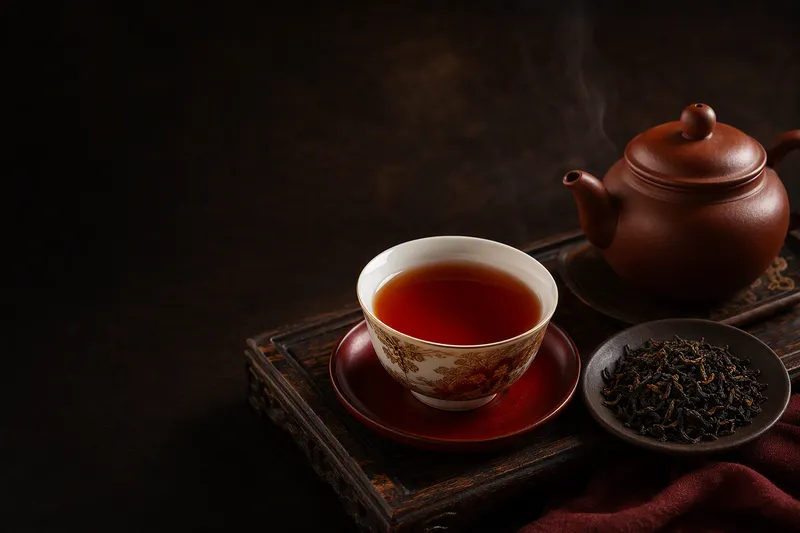
Many people assume that black tea should simply be brewed with boiling water and left to steep for several minutes to create a dark, powerful liquor. With Keemun black tea, this approach can conceal its most elegant qualities: delicate floral notes, gentle fruit character, and the warm sweetness that returns after each sip.
The rarity of Keemun black tea is not defined only by limited supply or price. It is better understood as a balance that is difficult to reproduce: a distinctive growing environment, a narrow window for selecting fresh leaves, careful craftsmanship, and a brewing method that preserves harmony between aroma and flavor.

Keemun black tea is associated with Qimen County in Anhui, China, where mountainous terrain, humidity, rainfall, and changing light create a distinctive growing environment. These conditions influence the aromatic compounds, polyphenols, and amino acids found in the fresh leaves.
Origin is therefore more than a name on a label. It is part of the flavor profile. When the raw material, season, and processing align, the finished tea can show a refined aromatic character that is difficult to reproduce elsewhere.
| Gaiwan | Teapot or Mug | |
|---|---|---|
| Tea | 3 g / 120–150 ml | 3 g / 250 ml |
| Water temperature | 90–95°C | 90–95°C |
| Steeping time | 8–12 seconds initially, then gradually longer | Start at 3 minutes and adjust |
| Infusions | 4–6 | 1–2 cups |
If you remember only one rule, make it this: do not judge Keemun black tea by steeping it for a long time. A very dark or bitter liquor does not automatically indicate better tea.
Keemun black tea is often formed into fine, tightly rolled, relatively even leaves. Its color may range from glossy black to deep brown depending on the raw material and processing. Look for clean leaves, limited breakage, and a natural sheen rather than relying on color alone.
Weigh 3 grams with a digital scale for a consistent tasting experience. Too little tea may feel thin; too much can bring bitterness and astringency forward too quickly.
Keemun benefits from fairly hot water to release its fragrance, but freshly boiling water should not be used for a long steep. Keep the water between 90 and 95°C. Without a thermometer, wait briefly after boiling before brewing.
Clean-tasting water also matters. Water with few distracting flavors allows the tea’s aroma and sweetness to show more clearly, while very hard water may make the liquor feel dull.
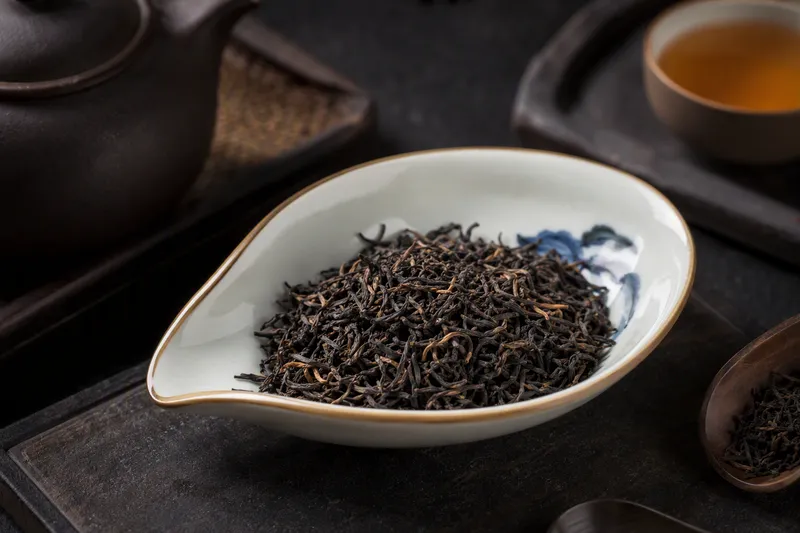
After adding hot water, pause before drinking. Notice the first aroma near the rim, then smell the lid or empty cup. Depending on the batch and grade, Keemun may suggest flowers, fruit, honey, dried fruit, or a deeper woody character.
You do not need to name every aroma immediately. Pay attention to whether the fragrance feels natural, integrates with the liquor, and continues into the finish. Layered aroma does not need to be loud; it often becomes clearer with each sip.
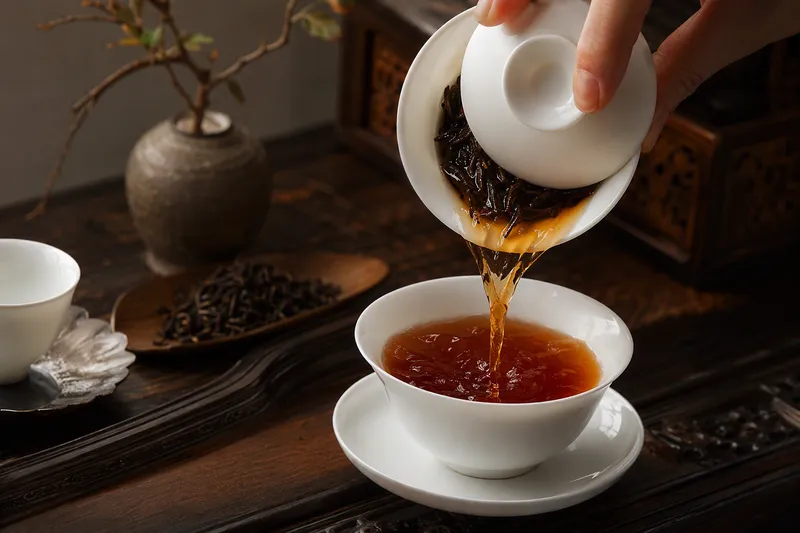
A 120–150 ml white porcelain gaiwan is ideal for observing how Keemun changes from infusion to infusion. Use 3 grams of tea, optionally rinse for about 3 seconds, then brew the first proper infusion for 8–12 seconds. Add a few seconds to each later infusion.
If the liquor becomes lighter but remains sweet and clean, extend the steeping time slightly. If the aroma disappears and only dryness remains, the tasting is nearing its natural end.
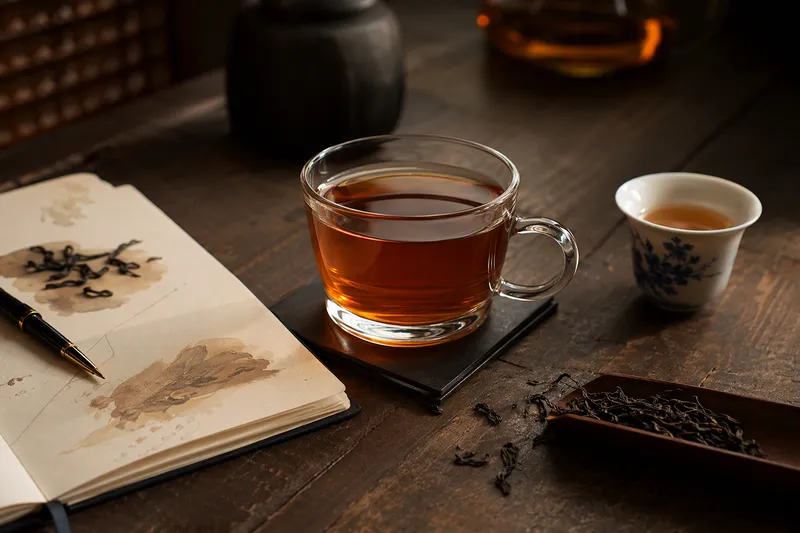
Begin your premium Keemun tasting with a single cup.
Choose tea with clear origin, batch, and grade information. Start with 3 grams, 90–95°C water, and 3 minutes, then discover the aroma and texture that suit your palate. Explore Keemun black tea.
Not necessarily. An overly strong cup may simply contain too much tea or have been steeped for too long. Consider aroma, smoothness, sweetness, and finish together.
With a gaiwan, you may rinse the leaves briefly for about 3 seconds. With a mug or glass, brewing directly is often preferable so the first aromatic layer is not lost.
Hot water is useful, but freshly boiling water should not be used for a long steep. A balanced range is 90–95°C, adjusted according to the tea grade and desired strength.
A gaiwan may produce around 4–6 satisfying infusions. A mug or teapot is generally better suited to 1–2 cups.
It is not one fixed scent. It describes a regional aromatic character that can vary with raw material, season, and processing. Floral, fruity, honeyed, and dried-fruit notes may all appear.
The rarity of Keemun black tea is not only about limited origin, valuable leaves, or complex production. It is also about the way landscape, season, craftsmanship, and time can be gathered into a cup that appears quiet at first.
It does not need exaggerated intensity to prove its worth. Smell first, observe the color, taste the entry, and wait for the finish. A tea truly worth keeping is the one that makes you slow down and rach for another sip.
Ready to discover authentic Keemun black tea?
Related Keemun guides: Start with the definition hub What is Keemun black tea? Brew it without bitterness in How to brew Keemun. Compare cups in Keemun vs English Breakfast and Keemun vs Dianhong. Still choosing leaf from this mountain system? How to choose Chinese tea from Huangshan.
Because Keemun is defined by place. Authentic Qimen Hong Cha comes from Qimen County in Anhui (and the official production zone), where climate, cultivars, and local processing create its floral-honey character. Tea grown and finished outside that origin may taste similar, but it should not be labeled as true Keemun.
Comments are closed.
Pingback: How to Choose Chinese Tea from Huangshan
Pingback: Keemun Black Tea Meaning: Taste, Grades & How to Buy
Pingback: How to Brew Keemun Black Tea (Gongfu & Western Method)
Pingback: Keemun vs Dianhong (Yunnan Gold): Taste & Which to Buy
Pingback: Keemun vs English Breakfast Tea: Taste, Caffeine & Which to Buy