
SHOPPING BAG0 ITEMS
Your Tea Basket is Empty
Hand-harvested spring mist greens, rare Keemun blacks, and Song Ru Kiln wares await.
Explore Curated Teas →
Powdered green tea for whisking exists in China and Japan. Here is what actually differs — origin, grading words, and ritual — without claiming Anhui matcha equals every Japanese ceremonial grade.
Many guides assume “matcha = Japan.” That default is common — and incomplete. Powdered green tea for whisking has a long Chinese history (often discussed as Song-era diancha / whisked powdered tea in tea history, not as a pedigree stamp for any one modern bag). Japan developed the tea-ceremony vocabulary most English speakers meet first: usucha, koicha, chasen, ceremonial grades. Both stories can be true at once.
At Xiangcha we pack Premium Matcha Green Tea Powder in Anhui — stone-milled powder for a daily bowl or latte. This guide explains where that powder comes from. It is not the same question as leaf vs powder; that comparison already lives on Huangshan Maofeng vs matcha.
On a phone, swipe the table sideways to see both columns.
| Chinese / Anhui matcha (this shop) | Japanese matcha (typical framing) | |
|---|---|---|
| Origin | Packed in Anhui; Chinese powdered-green tradition + modern latte use | Often linked to Uji, Nishio, Shizuoka and other Japanese regions in English guides |
| Processing notes | Our matcha: stone-milled powder for whisking or milk. We do not quote lab micron grades we cannot verify. | Classic description: shade-grown leaf finished as tencha, then stone-milled — common encyclopedia framing, not a claim about our matcha |
| Colour & taste | Jade green; smooth whisked cup or latte base — qualitative, lot-dependent | Often described as vivid green with umami / vegetal body — also lot- and grade-dependent |
| Grading language | “Ceremonial” / “culinary” appear in retail copy on both sides — marketing bands to verify against the cup | Same honesty: ceremonial / culinary are not a single world-wide legal grade you can trust by adjective alone |
| Ritual | Modern bowl or latte; Chinese history discusses whisked powdered tea (e.g. Song-era diancha) as cultural background, not shop pedigree | Usucha (thin frothy bowl) and koicha (thick paste-like bowl) in Japanese tea-ceremony framing |
| When to buy which | Want Anhui-packed powder for daily whisking or latte from this shop | Want a specific Japanese region / tea-school product and its ritual vocabulary |
Both are powdered green tea. You sift, add water (or milk), and whisk into a suspension — you drink the leaf particles. That is the opposite of Huangshan Maofeng or Houkui, where you steep whole leaf and pour a clear liquor. Shared tools often include a bamboo whisk (chasen), a bowl, and a scoop. Shared failure modes are the same: clumps if you skip sifting, harshness if the water is scalding hot, dusty dull powder if the bag is old or poorly stored.
So if your only question is “leaf or powder?”, stop here and read Maofeng vs matcha. If your question is “China or Japan on the powder aisle?”, keep reading.
English-language tea writing leans on Japanese tea-ceremony sources because that is the vocabulary that dominated Western tea writing for decades: matcha, usucha, koicha, ceremonial grade, Uji. That focus is useful for Japanese ritual literacy. It is a poor reason to erase Chinese powdered-tea history or to refuse an Anhui matcha that is honestly sold as Chinese matcha powder.
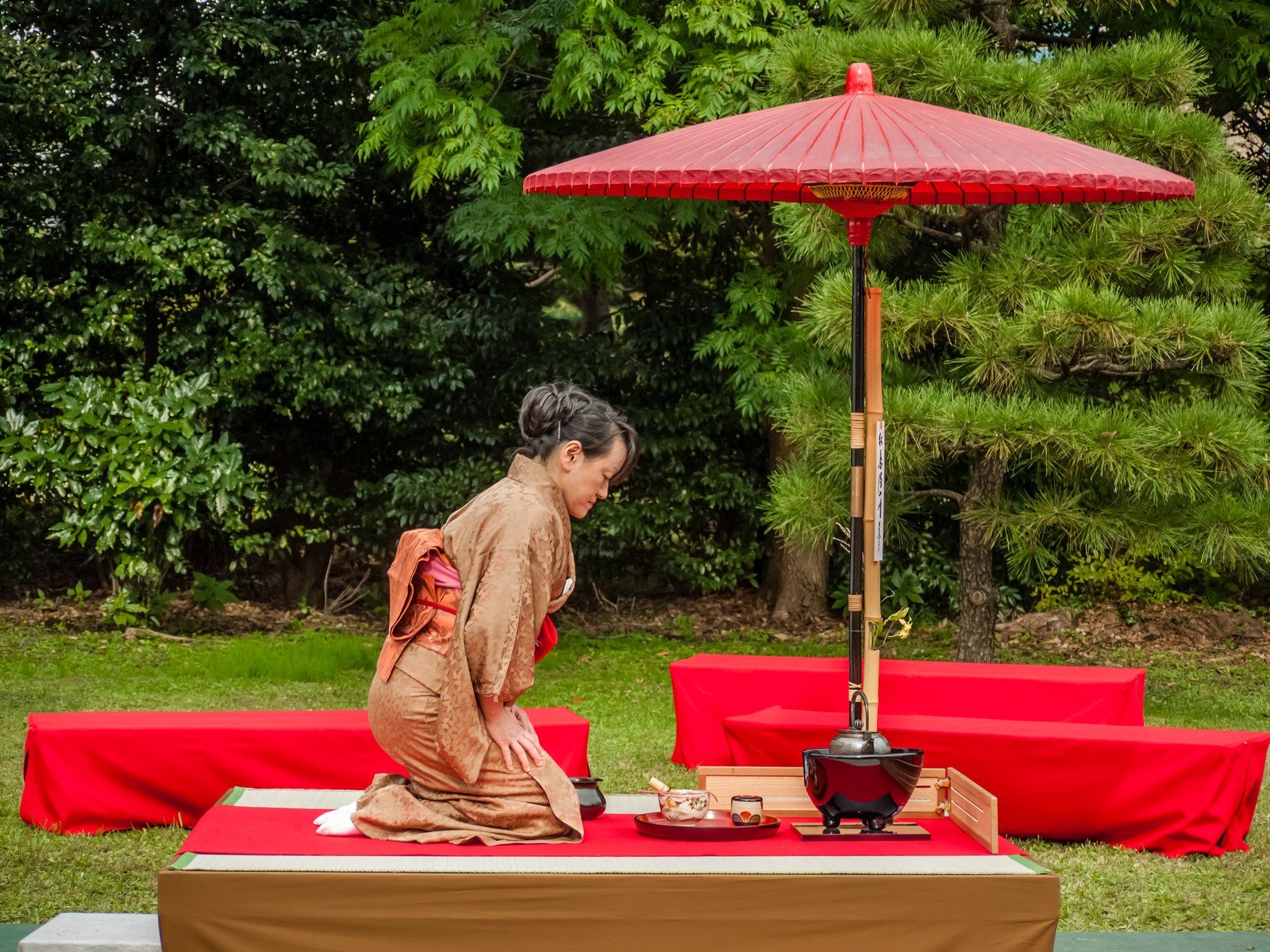
Japanese ceremony photos and chasen kits taught a generation what “matcha” looks like. Fair enough. Just remember the photo is a ritual frame, not a proof that every green powder on earth must be Japanese to be real.
Our product page describes our matcha as stone-milled powder for a daily bowl or latte — jade colour, smooth, not dusty supermarket green. Brew cue: sift about 2 g, whisk with 70–80°C water, or mix into milk. It is packed in Anhui. Our tea overview also uses ceremonial framing and shade / stone-mill language for the matcha line — treat that as shop storytelling about the powder ritual, and judge the tin by colour, aroma, and the whisked cup you get.
What we do not claim: that Anhui matcha is identical to Uji ceremonial; that every tin carries a lab certificate matching a Japanese tea-school grade; or that Song-dynasty whisking is a pedigree stamp for this powder. History can inspire a modern bowl without becoming a fake origin certificate.
For a straight bowl: sift the powder, use water in the cooler green band the product states (about 70–80°C on our matcha page), and whisk in a W or M motion until the suspension is frothy. For a latte: whisk a concentrated bowl first, then add milk — or blend carefully so clumps do not hide at the bottom. You are drinking a suspension, not a clear poured liquor.

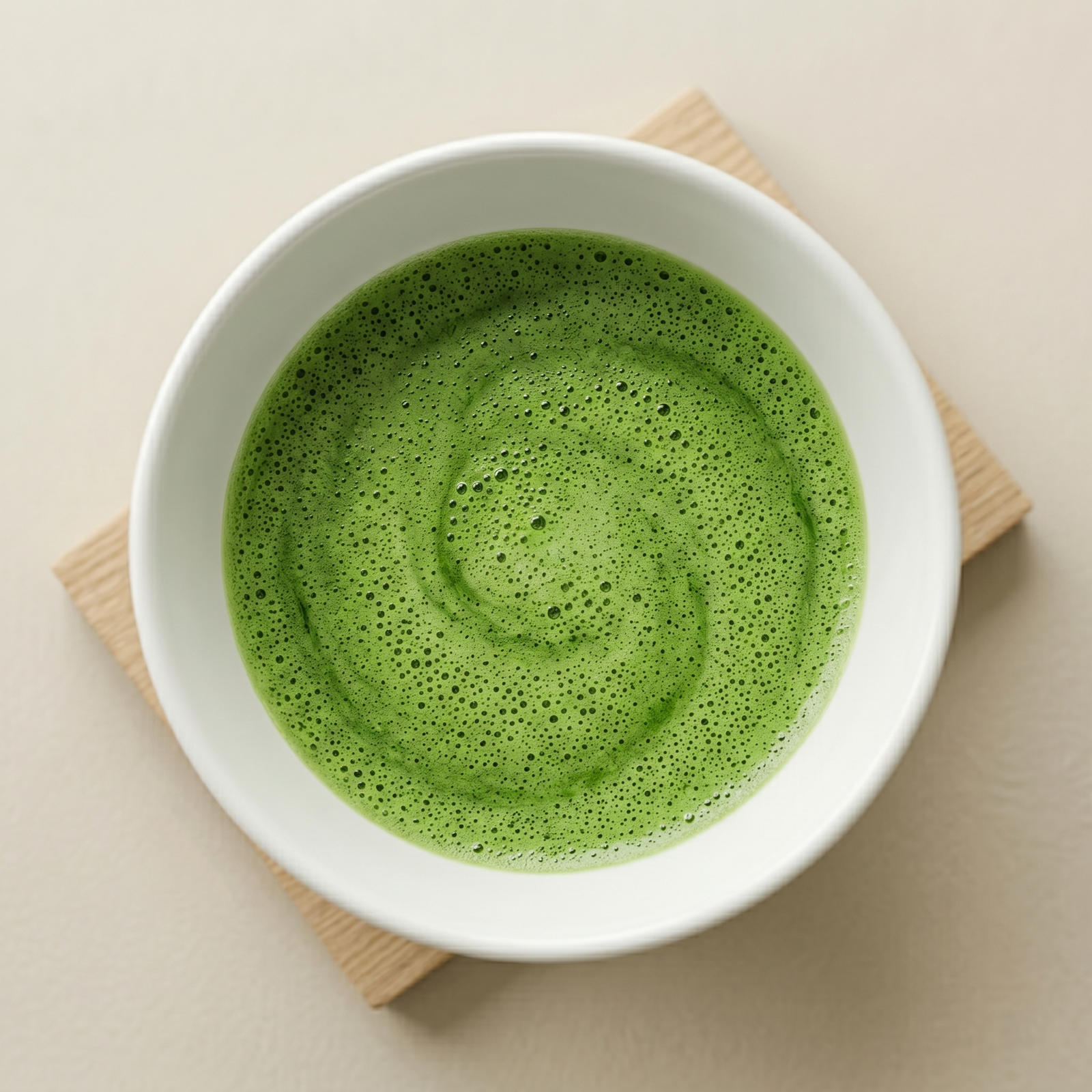
Need a bowl and whisk in one kit? See the optional cat-shaped matcha tea set — ceramic bowl, bamboo whisk, and scoop for a daily bowl. Rinse the whisk in warm water and dry it on a whisk holder (kusenaoshi), tines down, so it keeps its shape. Store opened powder airtight and cool, same common sense as other greens on how to store loose leaf tea.
Huangshan Maofeng vs matcha answers leaf vs powder: clear floral–chestnut liquor versus a thick whisked bowl. This page answers Chinese vs Japanese powder: two matcha traditions, one Anhui matcha in our shop, and honest limits on grade words. Keep Maofeng (or Houkui) when you want a poured Huangshan green. Keep matcha when you want whisking. Use this page when someone tells you matcha can only be Japanese.
Still mapping the whole Huangshan shelf? Start with How to choose Chinese tea from Huangshan — matcha sits there as a powder aside beside Keemun, Maofeng, Houkui, and Chaoqing.
Want Anhui matcha for a daily bowl or latte?
Shop Premium Matcha Green Tea Powder — stone-milled, packed in Anhui. The 30 g tin is a sensible size to try first.
Optional gear: Luxury cat-shaped matcha tea set (bowl, whisk, scoop).

Chinese matcha and Japanese matcha share a format. They do not share one passport. Buy the powder for the bowl you will whisk — and let origin, taste, and honest grading language do the rest.
Both are powdered green tea meant for whisking into a suspension, not for steeping and discarding leaf. Origin, cultivar language, grading words, and ritual expectations differ. Anhui matcha from this shop is for the powder ritual and flavor of that product — it is not an automatic substitute for every Japanese ceremonial grade by name alone.
It means stone-milled green tea powder packed in Anhui for a daily bowl or latte — jade colour, sifted, whisked at about 70–80°C with water or mixed into milk. Product copy on this site describes stone-milled powder; treat marketing words like ceremonial or culinary as shop labels to verify against the cup you get, not as lab certificates that equal Uji grades.
Usually not in a single protected legal sense you can trust across every brand. On both the Chinese and Japanese retail sides, ceremonial and culinary are often marketing bands. Judge colour, aroma, mouthfeel, and how the powder behaves when whisked or in a latte — not the adjective alone.
Huangshan Maofeng vs matcha compares leaf tea to powder — steeped clear liquor versus a whisked suspension. This page compares Chinese / Anhui matcha to Japanese matcha as two powder traditions. If you want a poured Huangshan green cup, stay with Maofeng (or Houkui). If you want whisking, stay on the powder aisle and choose by origin and taste, not by leaf-vs-powder confusion.
You can whisk any fine green tea powder with a bamboo whisk. Usucha and koicha are Japanese thickness and ritual framings — thin frothy bowl versus thick paste-like bowl. Anhui matcha can make a pleasant whisked cup or latte; that does not mean it is certified as a drop-in for every Japanese tea-school ceremonial product. Buy for the bowl you will actually drink.
Deepen your tea ritual with authentic terroirs, brewing insights, and artisanal teaware.
Craft cafe-style gradient layers with pure ceremonial Chinese matcha powder.
Read Guide →Master tea-to-water ratios, vessel preheating, and mindfulness in daily practice.
Read Guide →Comparing the pristine whole-leaf clarity with shaded stone-milled intensity.
Read Guide →Artisanal Celadon Whisking Bowl & Stand
