
SHOPPING BAG0 ITEMS
Your Tea Basket is Empty
Hand-harvested spring mist greens, rare Keemun blacks, and Song Ru Kiln wares await.
Explore Curated Teas →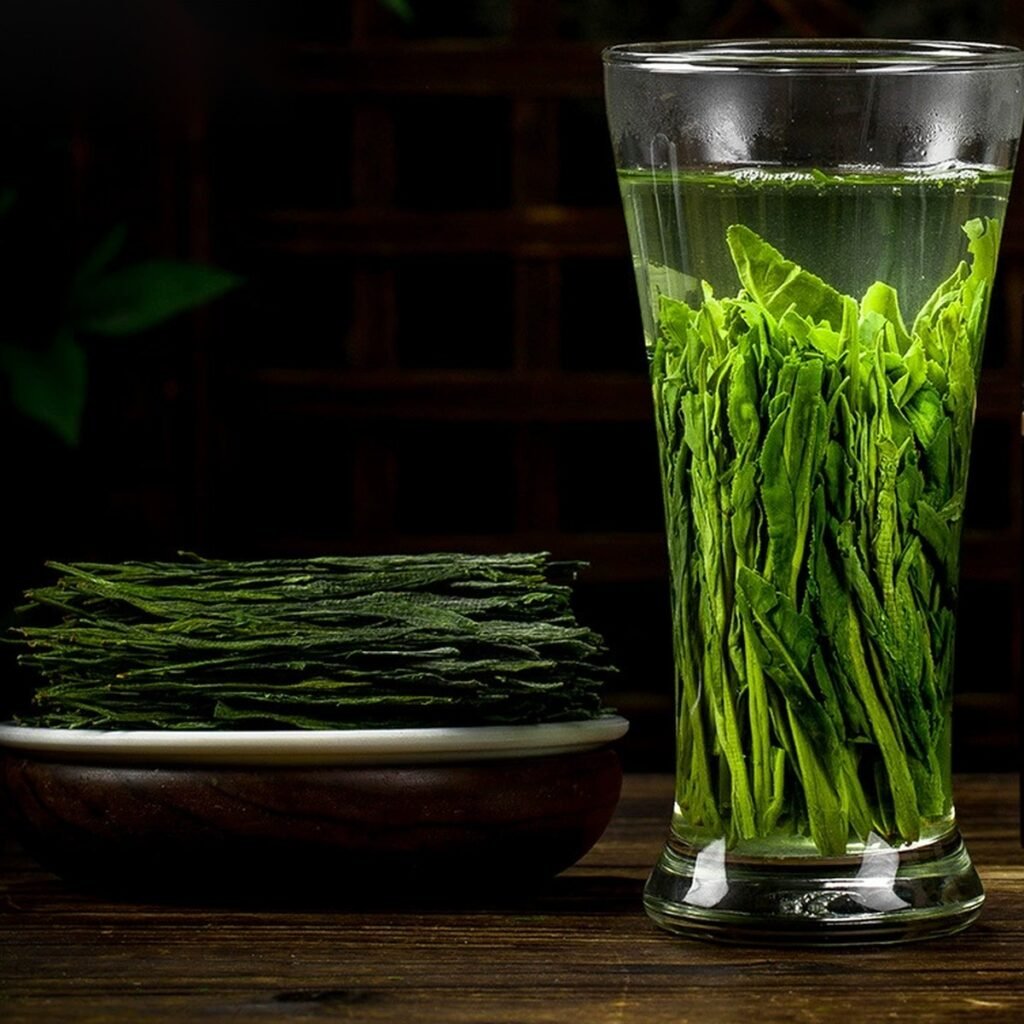
Taiping Houkui turns bitter when the water boils and the leaf sits too long. Use 80–85°C, about 3 g, and a tall glass so the long blades stand — then stop at three minutes.

Most people who say they “do not like Houkui” have been brewing it as if it were a tea bag: rolling boil, five minutes, a pinch of broken leaf. Taiping Houkui is a long, flat green. It scorches easily, and it is large enough that a teaspoon lies.
This is the method we use for Xiangcha’s Taiping Houkui — a tall glass when you want to watch the leaf, a gaiwan when you want several short cups. The leaf itself is covered in what Taiping Houkui is.
| Tall glass | Gaiwan | |
|---|---|---|
| Leaf | 3 g in 200–250 ml (weigh it; blade count varies) | 3 g in 120–150 ml |
| Water | 80–85°C / 176–185°F | 80–85°C / 176–185°F |
| Time | 2–3 minutes, then lift the leaf or drink off | Rinse 3 s, then 15–20 s, +5 s each round |
| Infusions | 1 glass, optional 2nd at 3 minutes | 4–6 cups from the same leaf |
If you only remember one rule: do not pour boiling water on Houkui. That is the whole of our green tea brewing guide, applied to a leaf that is even easier to cook.
Houkui is huge, and blade weight varies a lot from lot to lot, so counting blades is unreliable. Use a $10 jewelry scale once. The sweet spot for a 250 ml glass is 3 grams.
Too little leaf + long steep = a thin, cooked cup. Too much leaf + 90°C = a drying, spinachy cup. The orchid note lives in the middle.

Bring the kettle to a boil, then wait. Water 30–45 seconds off the boil is still above 90°C — too hot for Houkui. Leave the kettle lid off for 3–5 minutes, or use a thermometer. Target 80–85°C.
Extra trick: pour the water into a cold glass first, then onto the leaf. The glass takes off a few more degrees.
Spring or filtered water shows the sweetness more clearly than hard tap water. This is not romance — minerals flatten a pale green.
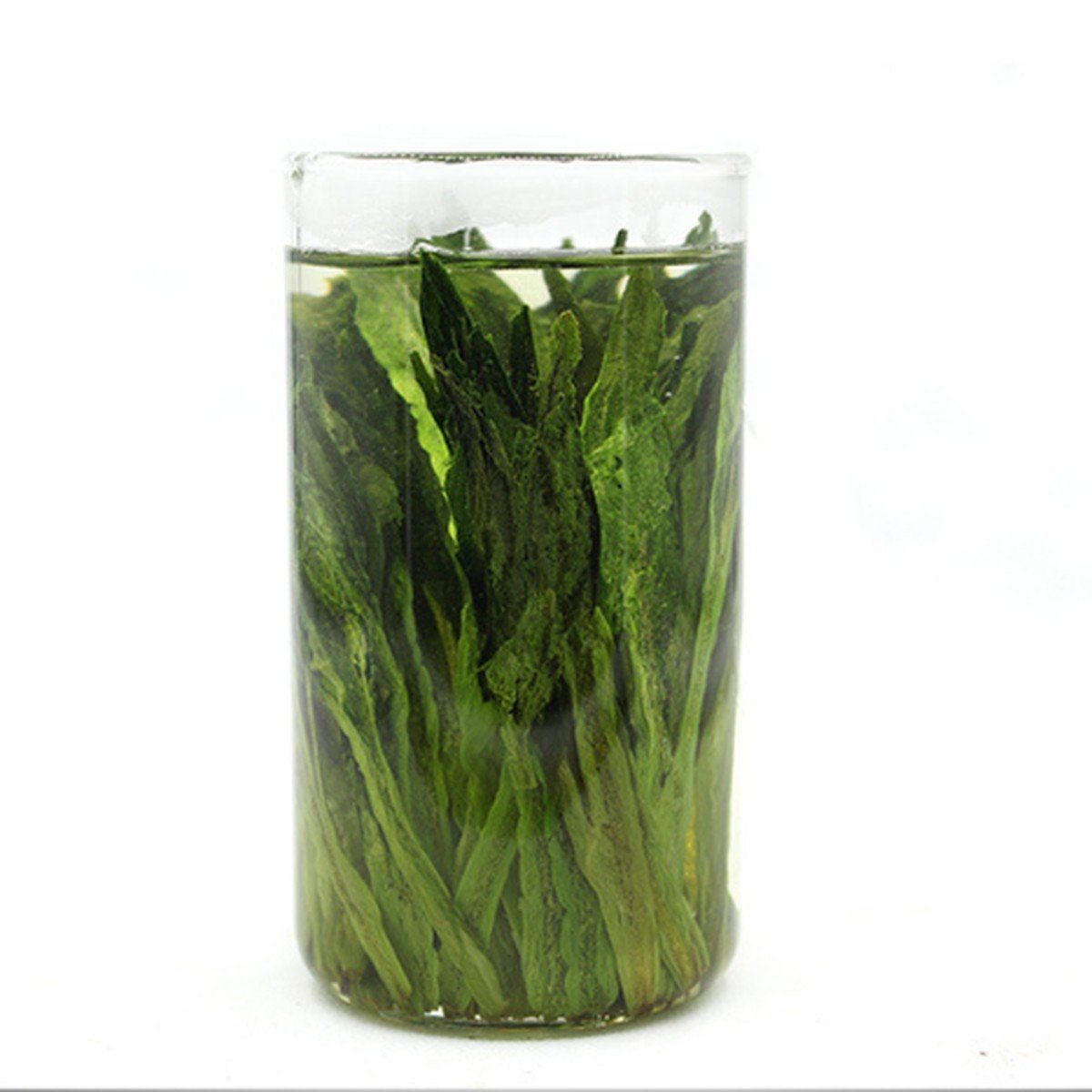
Put the dry blades in a tall, heat-safe glass. Pour down the side, not a jet on the bud. The leaves hydrate, go from forest green to bright, and usually stand upright. That “dance” is not a ceremony. It is how you know the water was not a rolling boil — cooked leaf slumps and yellows.
At 2 minutes, taste. If it is thin and sweet, give it 30 more seconds. If it is already brisk, drink. Do not walk away for ten minutes. Houkui left sitting in the glass is why people add honey.
A 120–150 ml porcelain gaiwan is enough. 3 g of Houkui looks generous in a small bowl — that is correct. A 3-second rinse, then 15–20 second steeps, adding about 5 seconds each round. You should get four to six cups before the orchid fades.
Gongfu gear is optional. If you already have a small set, the beginner layout is in Gongfu tea ceremony for beginners. Do not use a 300 ml pot and Western timings on this leaf; you will cook it.

Same leaf we photograph. Same numbers we brew.
Packed in Anhui. The 50 g pouch is the size to try first; tracking is emailed when it ships. Shop Taiping Houkui.
Yes, if the blades fit without snapping. 3 g, 80–85°C, 2–3 minutes, then lift the basket. You lose the standing-leaf view; the cup can still be sweet.
A 3-second rinse in a gaiwan is enough to wake the leaf. In a glass, skip the rinse — you will throw away the first pale liquor, which is the point.
Same temperature band, larger leaf. Maofeng is a twist you can gaiwan like any green. Houkui wants space to stand. Do not crush it to make it behave like a pellet tea.
Glass: one good cup, maybe a second. Gaiwan: four to six short cups. When the orchid is gone and only cellulose remains, stop.
Deepen your tea ritual with authentic terroirs, brewing insights, and artisanal teaware.
Comparing Anhui’s two crowning green teas in aroma, mouthfeel, and cultivar.
Read Guide →Distinguishing authentic Shi Da Cha whole leaves from machine-pressed counterfeits.
Read Guide →Learn why gentle 80°C brewing unlocks sweet L-theanine while taming tannins.
Read Guide →Handcrafted Auspicious Embossed Kungfu Set