
SHOPPING BAG0 ITEMS
Your Tea Basket is Empty
Hand-harvested spring mist greens, rare Keemun blacks, and Song Ru Kiln wares await.
Explore Curated Teas →
Taiping Houkui is one of the easiest Chinese teas to recognize and one of the easiest to imitate. Here is what to check before you buy: the leaf, the pressing marks, the color, the cup, the origin, and the questions a fair seller should be happy to answer.
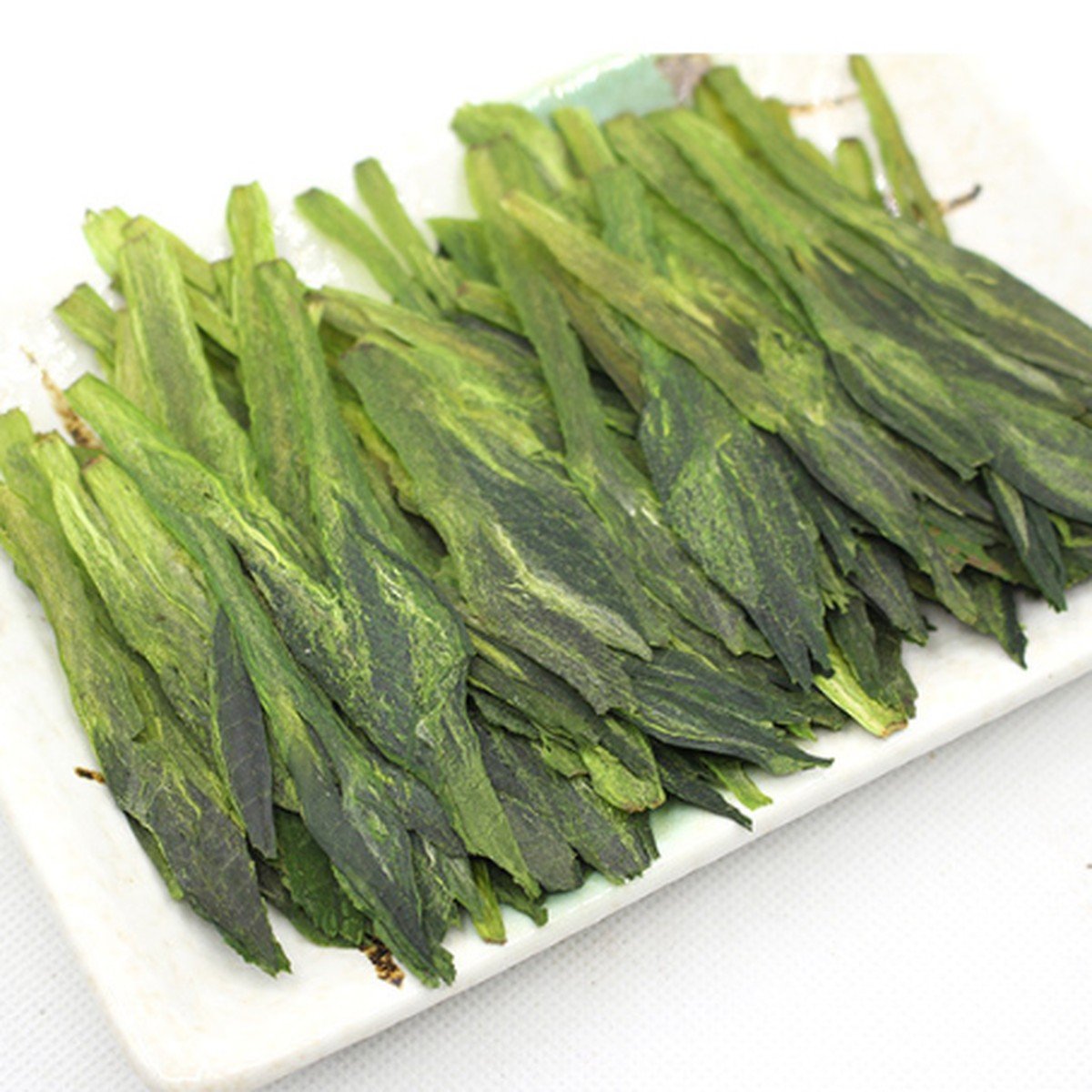
Houkui (太平猴魁) comes from Taiping, today’s Huangshan District in Anhui, and its long flat leaf is so distinctive that it is often the first Chinese green tea people learn to pick out by eye. That same fame is why so much “Houkui” on the market is something else: ordinary green leaf pressed long and flat, lower grades sold as top grades, or leaf from outside the classic area with a village name on the label.
This guide is a buyer’s checklist, not a lab test. Everything below is a sign that points one way or the other. Use them together. If you are new to the tea, start with What is Taiping Houkui?, and for how the leaf is heated and pressed, see How Taiping Houkui is handmade. We will not repeat the process here.
On a phone, swipe the table sideways to see all three columns.
| Sign | What real Houkui usually looks like | Red flag |
|---|---|---|
| Shape | Two leaves wrapped around a bud, flat and straight, pointed at both ends | Twisted, curled, or broken pieces; many loose single leaves and crumbs |
| Size | Long but in proportion; Chinese references commonly cite about 5–7 cm per set | Extreme length on a narrow, thin leaf that looks stretched |
| Thickness | Some body; the leaf is opaque when held up to the light | Paper-thin, see-through, brittle like toasted seaweed |
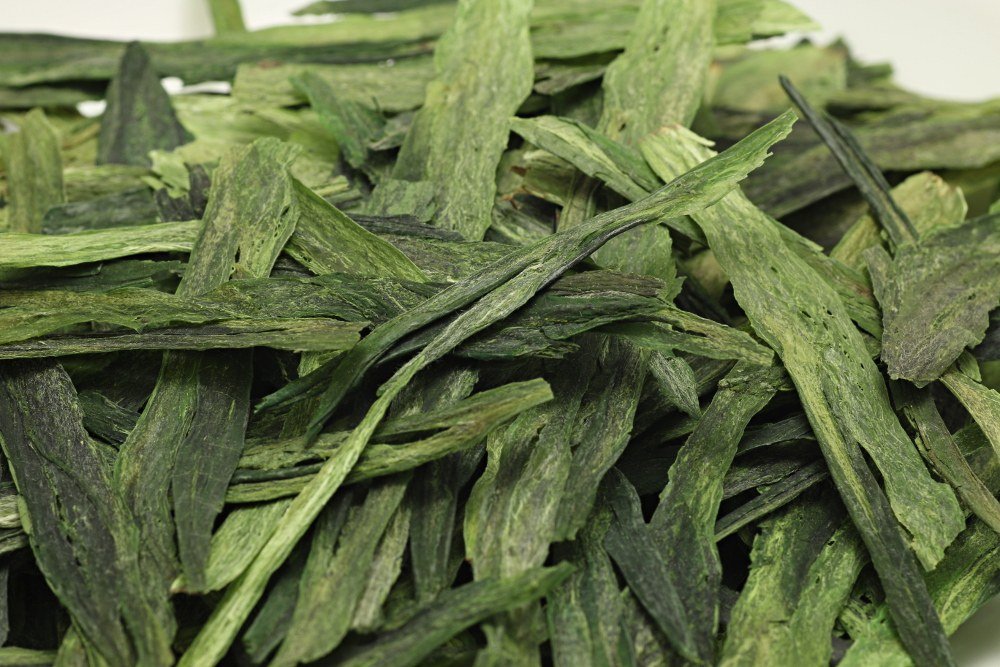
| Pressing marks | Often a faint crosshatch from the drying screens | Treating the grid as proof either way; a heavy, printed-looking grid on a paper-thin leaf |
| Vein | A clear midrib on the surface; sometimes a reddish tint along the veins (“red thread”) | Expecting the red thread on every leaf, or trusting it alone |
| Color | Deep, even dark green; almost blackish-green in shade | Yellowish, hay-colored, or patchy; scorched or blackened edges |
| Aroma | Orchid-like and fresh, with a clean vegetal sweetness | Smoke, perfume, or a flat, stale smell |
| Brewed leaf | Opens into whole sets that stand or hang in a tall glass; pale, clear liquor | Leaves fall apart or go limp and flat; the liquor turns dull quickly |
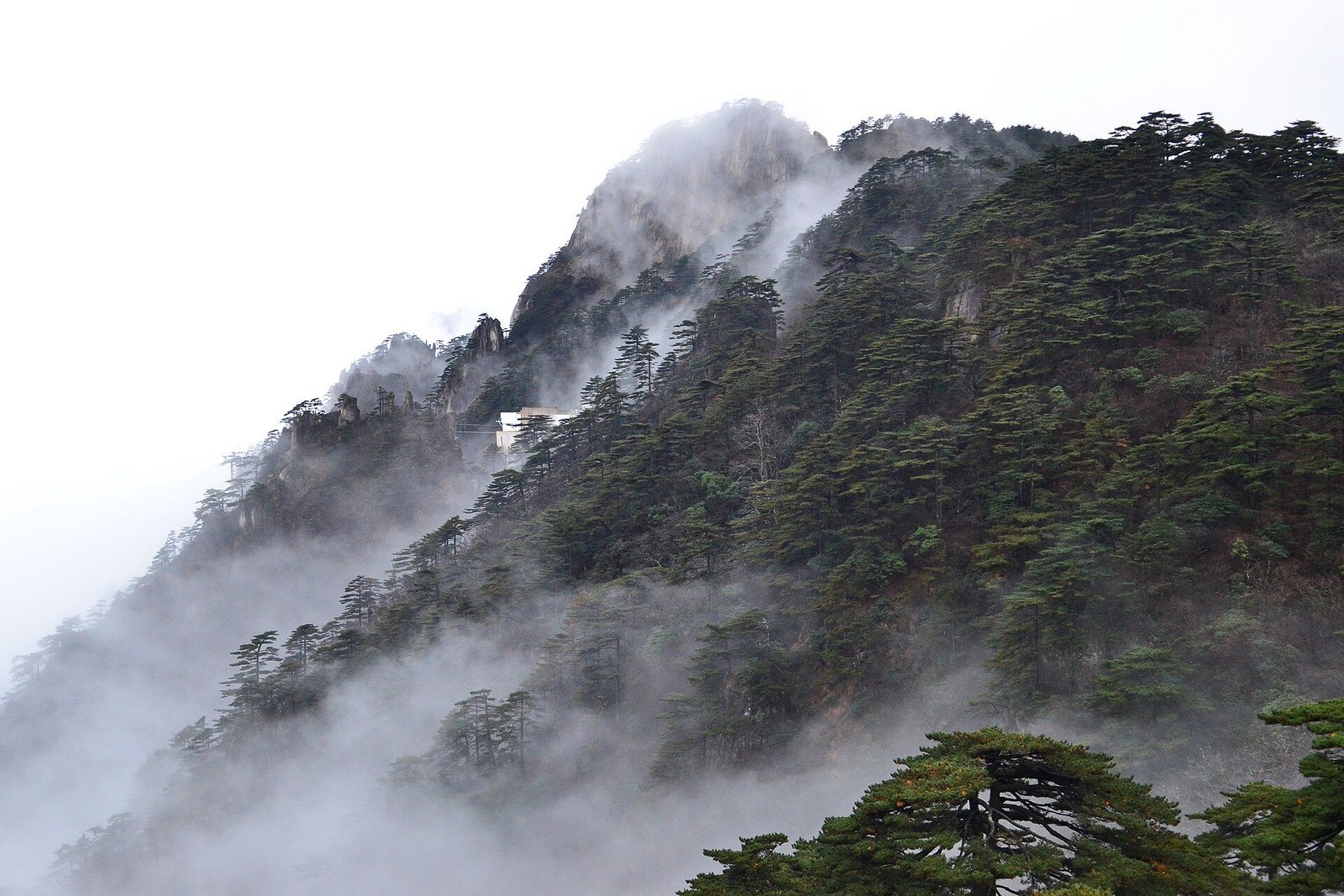
| Origin | Huangshan District (the former Taiping County) named; any Houkeng claim explained | “China green tea” with no place; a core-village claim with no detail |
| Harvest | Spring harvest year stated; Houkui is picked later than many early greens, around the Grain Rain period | No year at all; “pre-Qingming Houkui” marketing with no explanation |
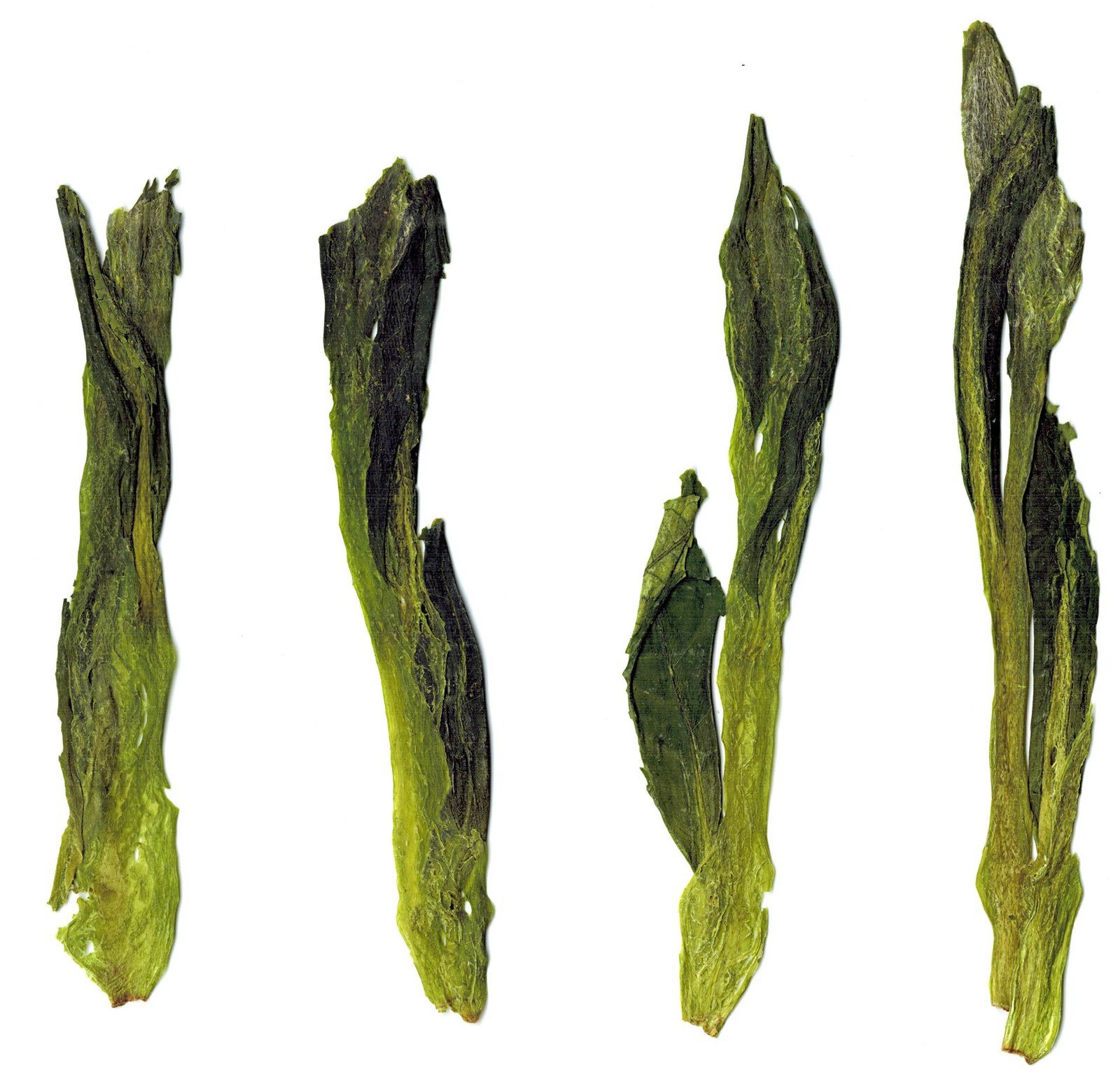
Pick up one piece and look at it on its own. A proper Houkui set is two leaves folded around a bud, pressed flat so the bud is tucked in rather than sticking out. Chinese tea people call it “two knives and a spear,” and describe good leaf as pointed at both ends, not loose, not curled, and without rolled-up edges.
Length is the famous feature, and Chinese references commonly describe a set as about 5–7 cm. But length is also the easiest thing to fake. Heavy rolling can stretch ordinary leaf into long, narrow strips. So instead of asking “is it long?”, ask “does it look like a whole leaf that grew this way?” Real sets have some width, a natural taper, and a bud you can find if you look.
If you want to know why the leaf is pressed instead of rolled, and what the heating step looks like, our short film is in How Taiping Houkui is handmade.
Open the pouch and smell before you brew. Fresh Houkui smells orchid-like and clean, with a gentle vegetal sweetness. Smoke means a different tea or a processing fault; perfume means flavoring; a flat, papery smell usually means the leaf is old or has been stored open.
Then brew it the way it is meant to be brewed: about 3 g in a tall glass, water at about 80–85°C, around 2–3 minutes. Watch the glass as much as you drink it.
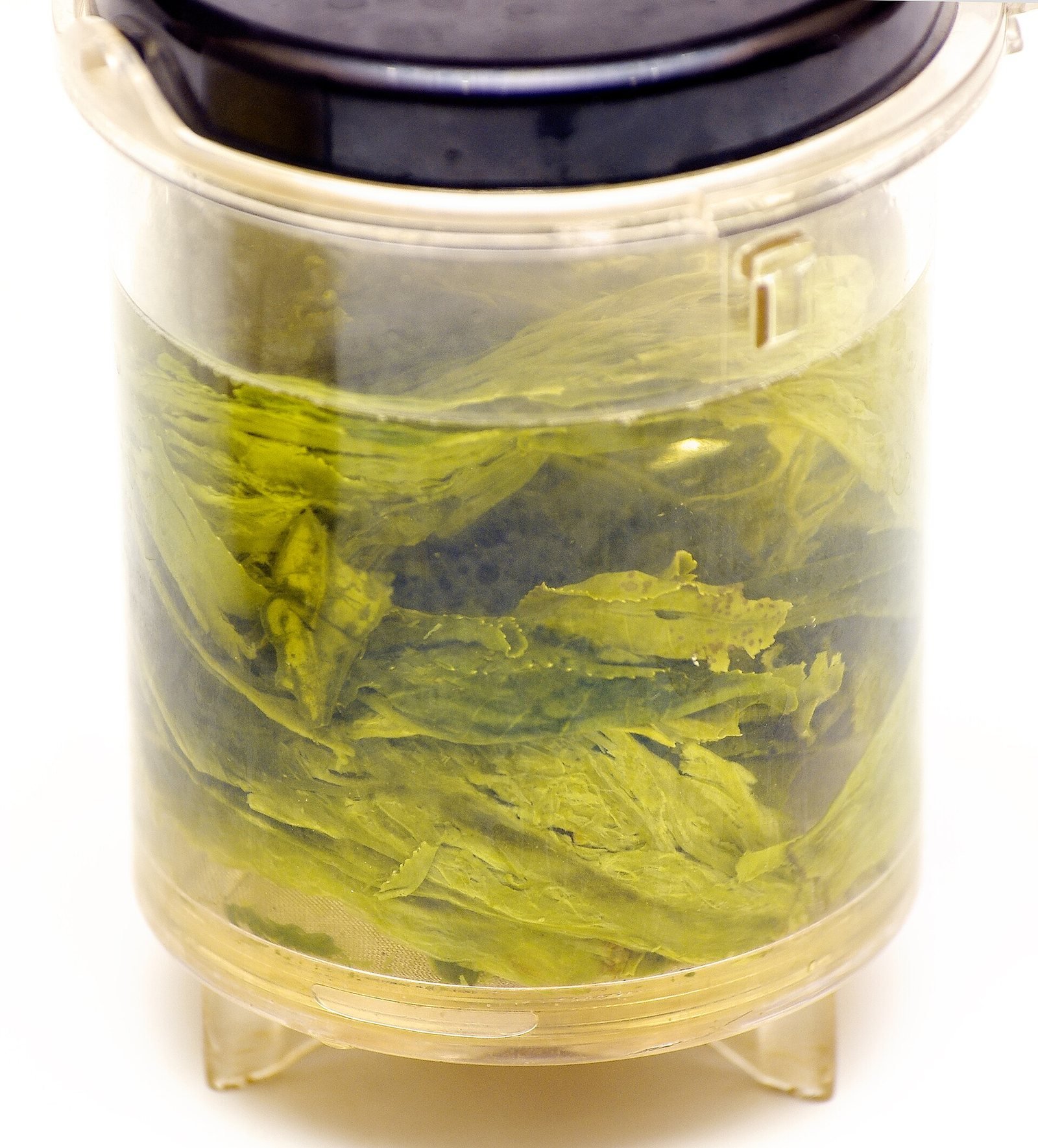
Full brewing steps, including a gaiwan option, are in How to brew Taiping Houkui. If your cup turns bitter, check the kettle first; our stop bitter green tea guide covers the usual causes.
Two levels of origin matter, and honest sellers keep them apart:

What does that mean for you? A tea from elsewhere in Huangshan District can be perfectly good Houkui. The thing to be careful about is a core-village claim at an everyday price with no detail behind it. When every bag in a market says “Houkeng,” the word stops meaning much. A seller who tells you “Huangshan District, daily lot” is often being more honest than one who puts a famous village on everything.
Two habits catch most of these: judge several signs together, not one, and be wary of extremes. Extra-long, extra-green, perfectly uniform, and very cheap is a combination that deserves questions.
You cannot visit the garden, but you can ask. A seller who knows the tea should be able to answer most of these without fuss:
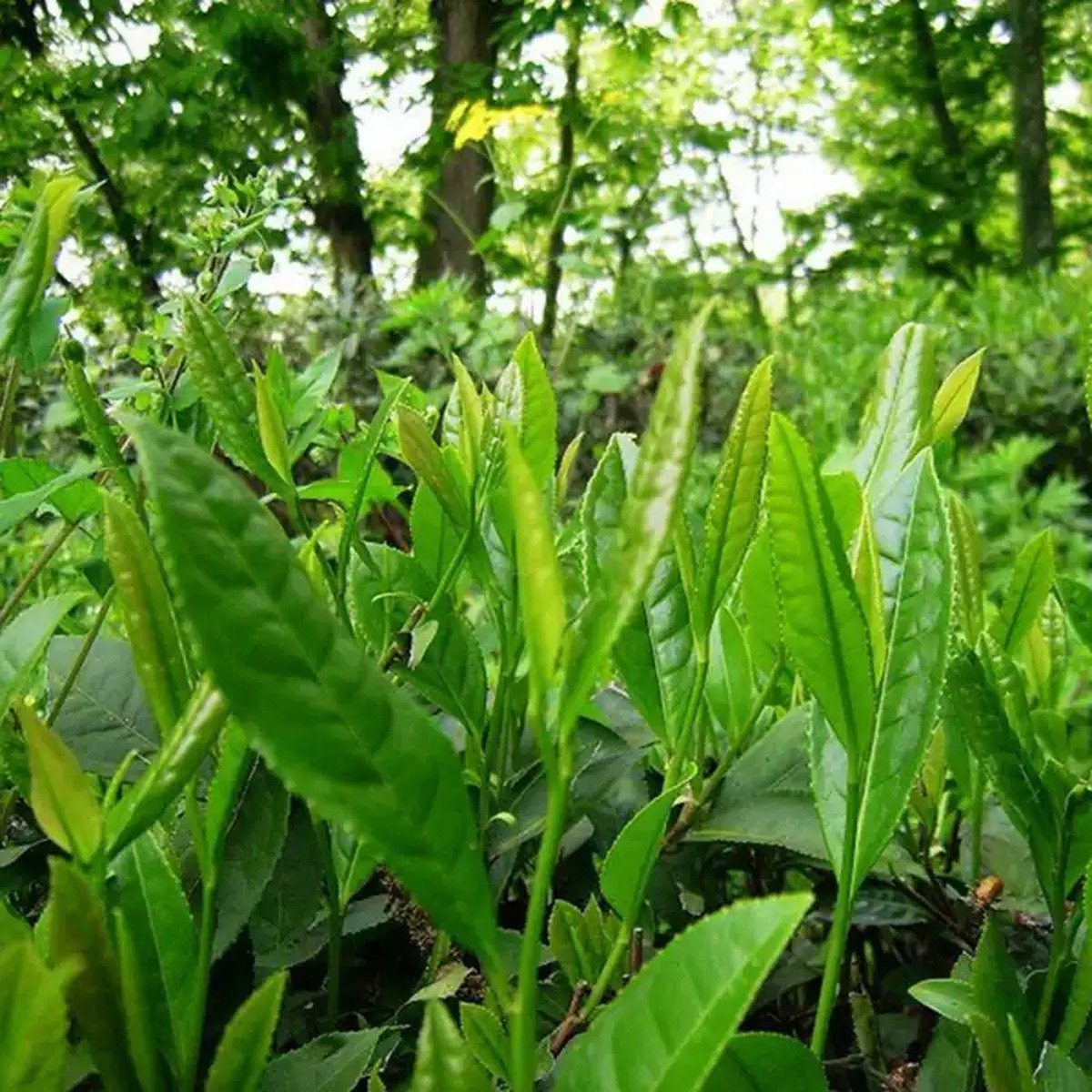
Use the same checklist on any Houkui you buy, including ours: look at the leaf set, the pressing marks, and the brewed leaf, and ask the seller where and when the tea was picked.
Check our leaf against this list.
A daily Taiping Houkui from the Taiping district, packed in Anhui. Shop Taiping Houkui
No checklist turns a buyer into a lab. But leaf shape, thickness, color, aroma, how the leaf opens in the glass, and a seller who answers questions will, together, steer you away from most bad Houkui. Buy the leaf and the cup, not the legend on the label. Still choosing between Huangshan greens? Taiping Houkui vs Huangshan Maofeng puts the two side by side.
No. The faint crosshatch comes from the screens the leaves are pressed and dried on, so it is common on modern Houkui, but machine-assisted lots can carry it too, and some old-method Houkui has almost none. Treat the mesh as one sign among several: look at leaf thickness, color, aroma, and how the leaf opens in the glass.
It is a reddish tint that can show along the midrib or side veins of the dry leaf, described in Chinese as green with a hidden red. It is linked to the hand-heating step, which can leave a little oxidation in the thick veins. It is a traditional marker, not a test: some genuine leaf shows it weakly, and its absence alone does not mean a tea is fake.
Not necessarily. Kuijian is a traditional name for a lower grade, and for similar pointed tea made outside the core Houkeng area. It can be an honest, pleasant tea. The problem is only when Kuijian or out-of-area leaf is sold as top-grade Houkeng Houkui. A fair seller names the grade and the area.
Chinese references commonly describe a Houkui set, two leaves around a bud, as roughly 5–7 cm long. Length alone proves little. Be more careful with leaves that are extremely long, very thin, and see-through, because heavy rolling can stretch ordinary leaf to look like Houkui.
Brewing tells you a lot, but not everything. Good Houkui brewed at about 80–85°C gives a pale, clear liquor with an orchid-like note, and the leaves open into whole sets of two leaves around a bud. Leaves that break up, go limp and paper-thin, or turn the liquor dull quickly are warning signs. Combine the glass with the dry-leaf checks and the seller’s information.
Deepen your tea ritual with authentic terroirs, brewing insights, and artisanal teaware.
Comparing Anhui’s two crowning green teas in aroma, mouthfeel, and cultivar.
Read Guide →Learn why gentle 80°C brewing unlocks sweet L-theanine while taming tannins.
Read Guide →Best practices to keep whole-leaf green and black teas aromatic for months.
Read Guide →Handcrafted Auspicious Embossed Kungfu Set


