
SHOPPING BAG0 ITEMS
Your Tea Basket is Empty
Hand-harvested spring mist greens, rare Keemun blacks, and Song Ru Kiln wares await.
Explore Curated Teas →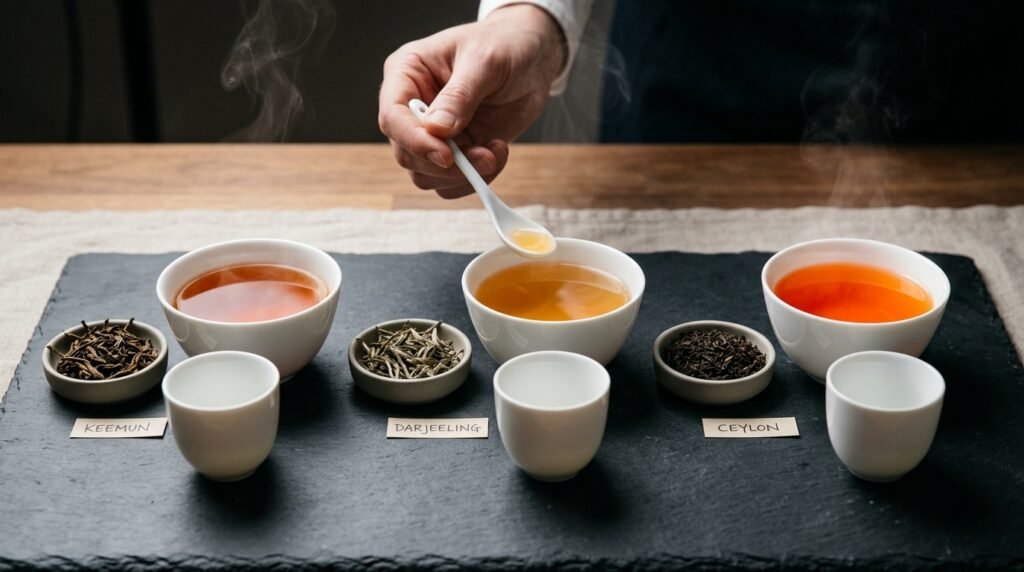
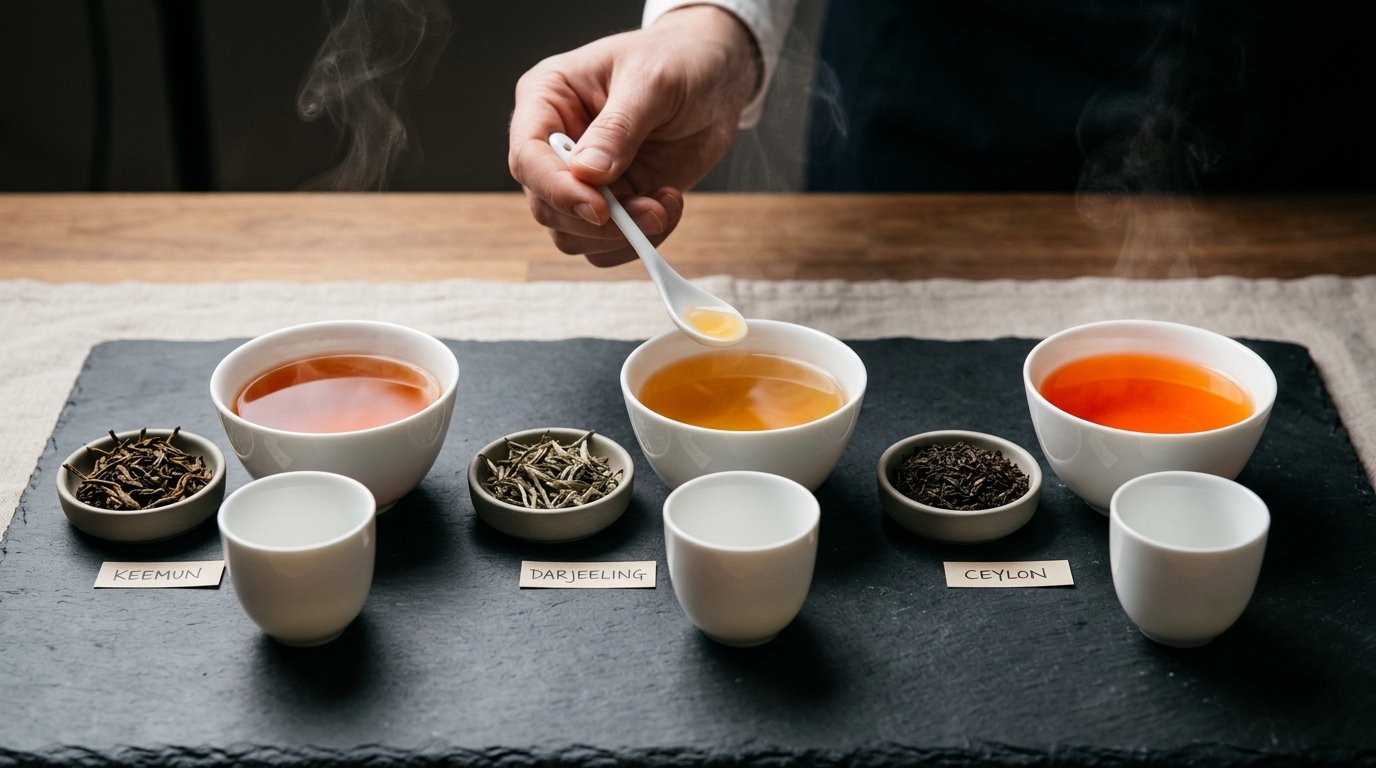
In international tea history, while thousands of estates produce black tea across Asia and Africa, only three regions have earned the prestigious title of the “World’s Three Great Scented Black Teas” (世界三大高香红茶): Chinese Keemun (祁门红茶), Indian Darjeeling (大吉岭), and Sri Lankan Ceylon Uva (锡兰乌瓦). But how do these three aristocratic harvests differ in terroir, botanical lineage, and flavor architecture?
In This Comparative Cupping:
During the late nineteenth century, as global trade established tea as the defining beverage of Europe and North America, British and international tea merchants recognized three distinct origins whose intoxicating natural aromatics stood head and shoulders above all industrial blending crops:
A tea’s fragrance is the liquid fingerprint of its ecosystem. The striking divergence between these three teas begins beneath the soil:
Located around latitude 30°N—the world’s renowned golden tea belt—Qimen County boasts an 80%+ forest canopy, acidic red-yellow soil enriched by decomposed granite, and over 200 cloudy or foggy days annually. The diffused mountain light stimulates the accumulation of L-theanine and fragrant monoterpene alcohols, keeping tannin astringency exceptionally low.
Perched between 1,000 and 2,200 meters in northern India, Darjeeling gardens face steep alpine ravines and thin mountain air. Intense UV sunlight during day and sharp drops in nocturnal temperatures stress the bush, creating the distinctive pyrazine and terpene compounds that register as dry white wine and muscatel grape.
Between July and September, the southwest monsoon dumps moisture on western Sri Lankan ridges, then crosses central mountain passes as a warm, desiccating wind over the Uva valley. This sudden climatic shock stresses the leaves, concentrating methyl salicylate—the natural compound responsible for Uva’s trademark wintergreen and eucalyptus sharpness.
The botanical lineage of each bush dictates how its enzymes react during processing:
The culinary philosophy of the tea maker completes the magic:
1. Keemun: 100% Fully Oxidized with Gentle Slow Charcoal Roasting.
Authentic orthodox Keemun is fully fermented in shallow bamboo trays under strict 22°C–24°C and 90% humidity controls. It undergoes a meticulous seventeen-step refining process (初制与精制) and ends with gentle fruitwood charcoal ember roasting (Hong Bei). This caramelizes natural leaf sugars, sealing in sweet honey notes and muting bitter catechins.
2. Darjeeling: “Hard Wither” with Incomplete (Partial) Oxidation.
Technically sold as black tea, modern First and Second Flush Darjeelings are heavily withered (down to 65% moisture loss) and only partially oxidized (often only 50% to 70%). The liquor remains greenish-gold or light amber, delivering brisk, wine-like crispness reminiscent of an oolong.
3. Ceylon Uva: Rotorvane Orthodox or CTC Fast Oxidation.
Harvested leaves are rolled briskly and oxidized quickly to preserve pungent pungency and high thearubigins, giving the cup its coppery-orange depth and immediate palate kick.
| Metric | Keemun Black Tea | Darjeeling (2nd Flush) | Ceylon Uva |
|---|---|---|---|
| Origin & Country | Qimen, Anhui, China | West Bengal, India | Central Highlands, Sri Lanka |
| Botanical Cultivar | Zhuyeqi (Small Leaf) | Sinensis & Clonal Hybrids | Assamica (Broad Leaf) |
| Primary Aromatic Profile | Damascus rose, wild honey, dried apple, aged cedarwood | Muscatel grape, peach, floral jasmine, fresh pine | Wintergreen menthol, zesty citrus, malt, woodsmoke |
| Liquor Color | Luminous clear amber-red with golden halo ring | Bright golden-amber to sparkling copper | Deep coppery-orange to vivid scarlet |
| Mouthfeel & Tannin | Velvety, smooth, naturally sweet, zero harsh bitterness | Brisk, wine-like crispness, moderate astringency | Bold, pungent, drying tannic grip, punchy |
| Best Enjoyment Style | Pure Gongfu Gaiwan infusion or refined porcelain cup | Pure afternoon infusion; glass teaware | Breakfast cup; handles milk, lemon, or brown sugar |
Darjeeling and Ceylon began black tea cultivation in the mid-nineteenth century (1840s to 1860s). Keemun was created in 1875 by Hu Yuanlong in Qimen, Anhui, by adapting traditional Wuyi black tea methods to Huangshan’s prized green tea cultivar. Despite being the youngest of the three, Keemun immediately dominated the Victorian international market due to its unmatched sweetness.
The native Zhuyeqi cultivar contains an optimal ratio of amino acids (L-theanine) to catechins. Furthermore, traditional 100% full orthodox oxidation converts astringent catechins into smooth theaflavins and thearubigins, preventing the tongue-drying astringency found in Ceylon or green teas.
Keemun is by far the most rewarding in a gaiwan because its tight wiry leaves unfurl slowly across 8 to 10 distinct infusions. Darjeeling and Ceylon can be brewed in a gaiwan, but typically exhaust their peak flavors within 3 to 4 infusions due to their lighter oxidation or broken leaf grades.
Deepen your tea ritual with authentic terroirs, brewing insights, and artisanal teaware.
Why Song Dynasty natural agate glazes develop auspicious golden tea veins.
Read Guide →Slow cold-water extraction at 4°C preserving delicate Damascus rose aromas.
Read Guide →Understanding native Zhuyeqi terroirs, grading differences, and honeyed bouquets.
Read Guide →Natural Agate Glaze Song Dynasty Teaset