
SHOPPING BAG0 ITEMS
Your Tea Basket is Empty
Hand-harvested spring mist greens, rare Keemun blacks, and Song Ru Kiln wares await.
Explore Curated Teas →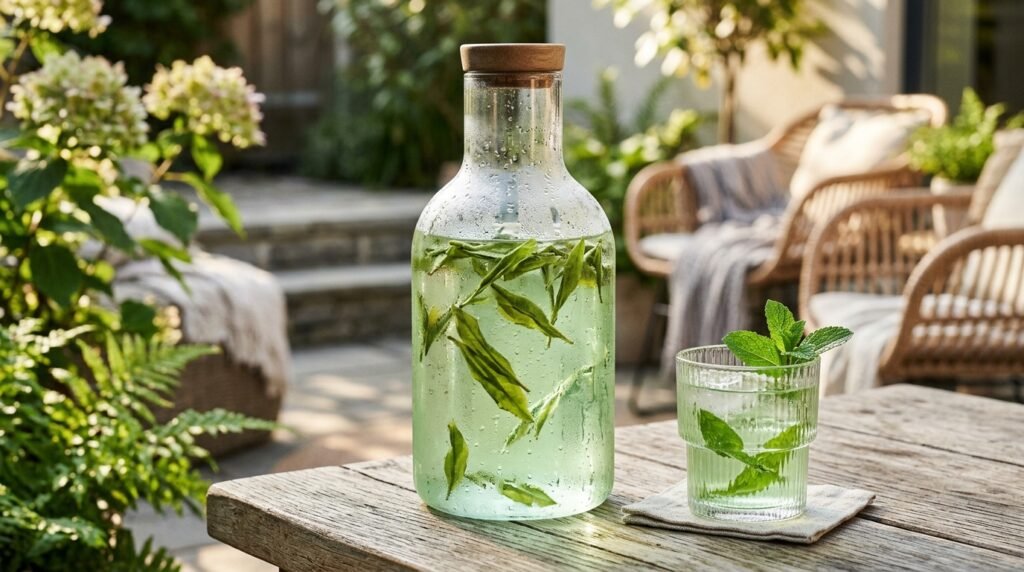
For centuries, the global tea canon taught that boiling water was mandatory to awaken dried tea leaves. Yet modern food science has revealed a quiet revolution: by replacing thermal heat with slow, chilled diffusion, you can fundamentally alter the molecular extraction curve of green tea—unlocking an intensely sweet, honeysuckle-like elixir completely devoid of bitterness and harsh astringency.
In This Masterclass:
Every dried tea leaf contains hundreds of complex organic compounds, each possessing its own thermodynamic dissolution threshold. When you steep tea in hot water (80°C to 100°C), thermal kinetic energy rapidly dissolves everything simultaneously: volatile floral aromas, sweet amino acids, bitter caffeine, and sharp polyphenolic catechins.
However, when you immerse tea leaves in chilled water (4°C / 39°F), the physics of extraction changes dramatically. Water molecules move with far less kinetic force. Rather than a chaotic rush, extraction becomes highly selective.
The secret star of high-mountain green tea is L-Theanine, a unique non-proteinogenic amino acid found almost exclusively in the Camellia sinensis plant. L-Theanine is responsible for the calming, focused cognitive state associated with tea, as well as its savory, brothy umami sweetness.
Crucially, L-theanine and natural simple sugars dissolve readily in cold water, requiring very little thermal energy to liberate from the leaf matrix. Within 2 to 3 hours in the refrigerator, cold water has already extracted up to 80% of the leaf’s sweet amino acid content.
By contrast, bitter and astringent compounds—chiefly epigallocatechin gallate (EGCG) and heavy ester catechins—require thermal energy above 70°C to break their chemical bonds and dissolve efficiently into solution.
Because the refrigerator suppresses the extraction of bitter tannins while fully capturing sweet amino acids, the resulting cold brew green tea possesses a shockingly round, smooth, and naturally sweet flavor profile.
You will find zero need to add simple syrup, agave, or honey. The liquor coats the throat with clean melon, cucumber, and orchid notes, leaving a crisp, thirst-quenching finish that commercial bottled iced teas laden with sugar cannot match.
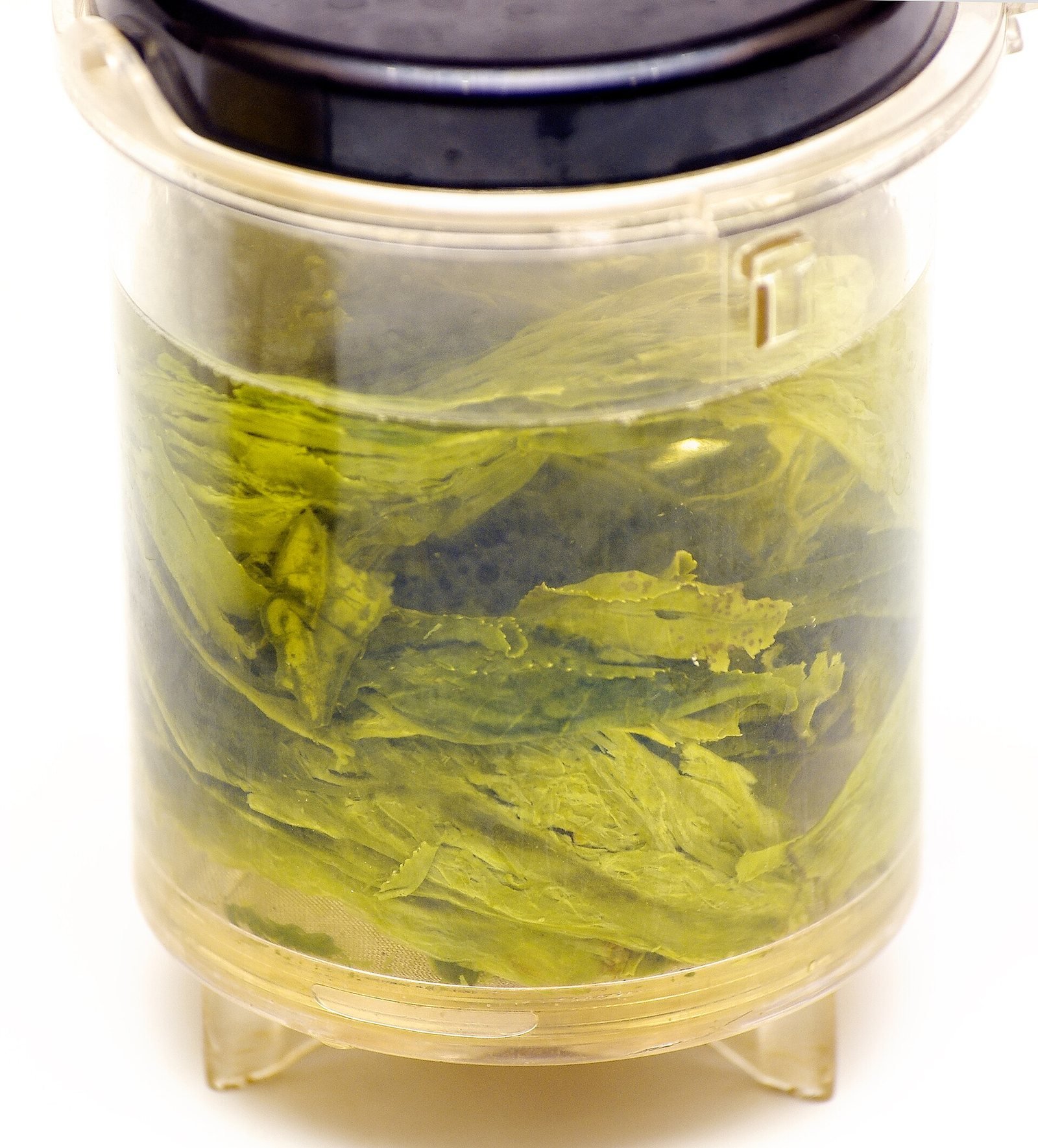
Not all green teas perform equally in cold water. Commercial tea bags contain fannings and dust—minute particles with high surface-area-to-volume ratios. In cold water, broken dust leaches cellular chlorophyll prematurely, turning the liquor cloudy, khaki-colored, and grassy.
To achieve pristine clarity and sublime flavor, reach for artisan whole-leaf harvests:
| Method | Brewing Time | Ratio (Tea : Water) | Flavor Profile |
|---|---|---|---|
| Overnight Fridge Immersion | 6 to 10 Hours | 1g : 100mL (10g / Liter) | Balanced, refreshing, crisp melon and sweet grass; perfect for daily hydration |
| Ice Melting (Kouridashi 氷出し) | 2 to 3 Hours (As ice melts) | 5g : 150g Dense Ice Cubes | Hyper-concentrated sweet umami syrup; gourmet tasting experience |
| Rapid Cold Shake | 5 Minutes (Vigorous agitation) | 1g : 80mL with crushed ice | Light and brisk; useful in high-volume cocktail bars |
To craft the ultimate batch of cold brew green tea at home, follow this foolproof protocol:
Ideal Serving: Chilled in Fluted Glass
Yes. Caffeine solubility is highly temperature-dependent. At 4°C, cold water extracts approximately 40% to 50% less caffeine than water at 90°C. Combined with high concentrations of soothing L-theanine, cold brew delivers calm, jitter-free hydration ideal for warm afternoons.
Yes! Whole-leaf teas like Taiping Houkui can be cold brewed a second time. Simply strain off the first batch, refill with cold water, and let it steep in the fridge for an extended 10 to 12 hours. The second steep offers a subtler, sweeter floral finish.
Polyphenol oxidase enzymes naturally oxidize green tea catechins over time when exposed to ambient oxygen. To prevent browning, store your cold brew in an airtight glass container filled to the very top, and consume within 36 to 48 hours.
Yes! Cold brewing green tea in a sealed bottle of lightly effervescent spring water produces a sparkling tea “champagne.” The carbonation elevates aromatic floral notes right up to the nose, creating an exquisite non-alcoholic aperitif.
Always cold brew inside a refrigerator below 5°C (41°F). Leaving moist organic tea leaves at room temperature for 8+ hours invites bacterial multiplication and accelerates oxidation.
Handcrafted from pristine Huangshan misty peaks, our Taiping Houkui and Huangshan Maofeng loose leaf harvests unlock a new realm of crisp sweetness when cold brewed.
Deepen your tea ritual with authentic terroirs, brewing insights, and artisanal teaware.
Comparing Anhui’s two crowning green teas in aroma, mouthfeel, and cultivar.
Read Guide →Distinguishing authentic Shi Da Cha whole leaves from machine-pressed counterfeits.
Read Guide →Learn why gentle 80°C brewing unlocks sweet L-theanine while taming tannins.
Read Guide →Handcrafted Auspicious Embossed Kungfu Set