
SHOPPING BAG0 ITEMS
Your Tea Basket is Empty
Hand-harvested spring mist greens, rare Keemun blacks, and Song Ru Kiln wares await.
Explore Curated Teas →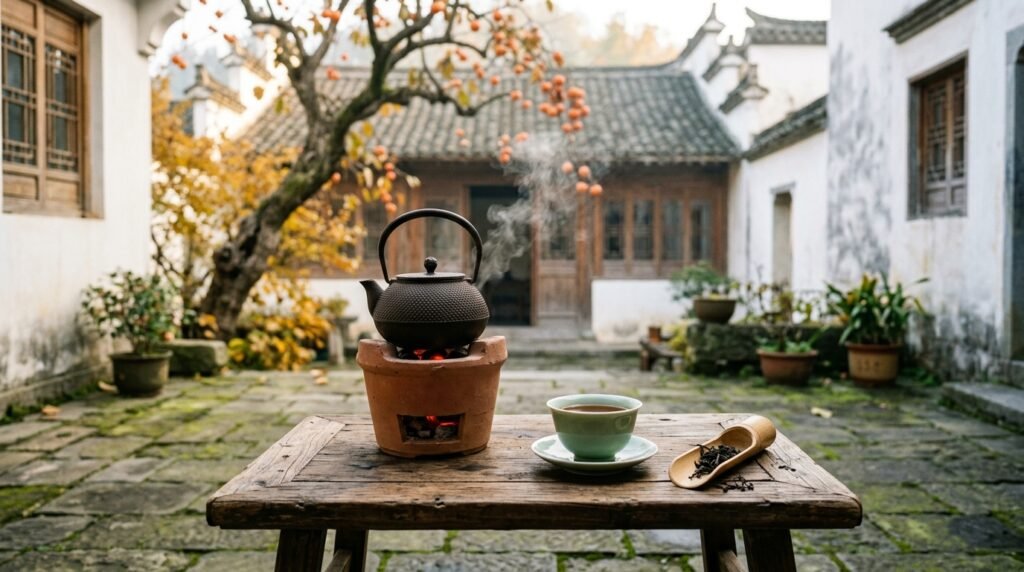
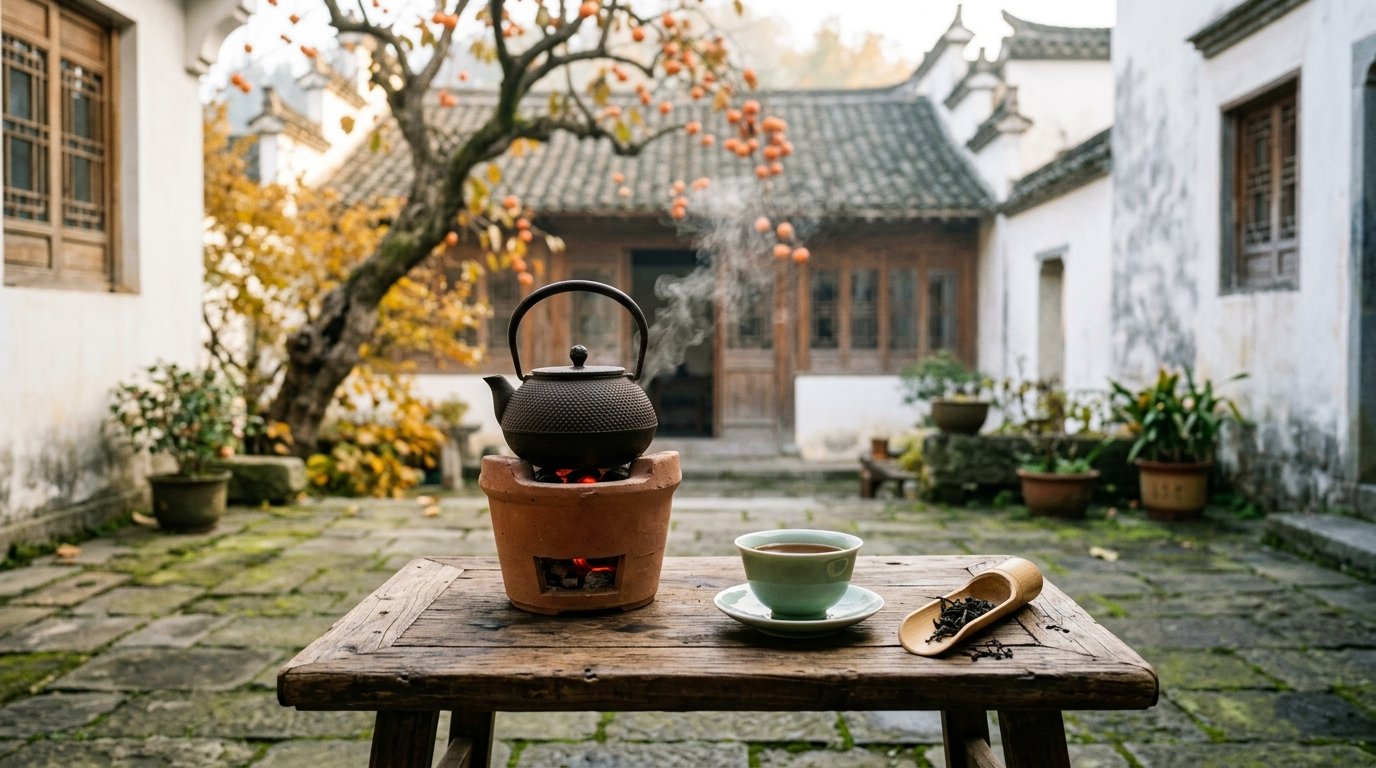
Wei Lu Zhu Cha (围炉煮茶) is an ancient communal tea tradition native to Jiangnan and southern Anhui (historical Huizhou). Conducted around a portable earthenware hearth fueled by odorless fruitwood or bamboo charcoal, the ritual involves simmering robust, oxidized teas—predominantly orthodox Keemun black tea—alongside roasted persimmons, chestnuts, and red dates. Unlike delicate spring green tea flash-steeping, prolonged low-temperature simmering dissolves complex polysaccharides, yielding a velvety liquor rich in dried-longan sweetness and comforting thermal warmth.
When autumn settles over southern Anhui’s historic Huizhou prefecture—anchored by the UNESCO heritage hamlets of Hongcun, Xidi, and the terraced orchards of Tachuan—the sensory landscape shifts dramatically. Summer’s humid emerald canopy gives way to fiery Chinese tallow trees, ancient golden ginkgoes, and leafless persimmon branches bowed beneath glossy orange globes.
Behind the high white horse-head firewall (Matao Qiang) of centuries-old Ming and Qing dynasty courtyards, mountain mornings are crisp and brisk. As the cool air drifts down from Mount Huangshan, locals gather around a small clay stove. Here, tea is not merely brewed; it is slow-simmered, transforming the hearth into a sanctuary of warmth, aroma, and mindful conversation.
In spring, tea lovers pursue fresh chlorophyll and volatile floral aromatics through quick, high-temperature gaiwan flash-steeps (10–15 seconds). But in the chill of autumn, the palate instinctively seeks depth, body, and sustained throat-warming sweetness (Hui Gan).
Traditional orthodox Keemun Black Tea (Qimen Hong Cha) is uniquely qualified for gentle hearth simmering due to its deliberate 17-step craftsmanship:
| Parameter | Gaiwan Flash-Steep (Spring/Standard) | Hearth Simmering (Autumn Hearth Ritual) |
|---|---|---|
| Water Temperature | 90°C–92°C (Controlled Pour) | 85°C–90°C (Sustained Low Simmer) |
| Contact Duration | 10–25 seconds per steep | 5–12 minutes continuous heat |
| Flavor Profile | Bright rose, orchid, crisp stone fruit | Malt, cooked date, honeyed wood, stewed plum |
| Recommended Vessel | Porcelain or thin-walled gaiwan | Cast iron tetsubin or coarse stoneware kettle |
Recreating the Huizhou hearth ritual at home—whether around an outdoor fire pit, a tabletop smokeless charcoal brazier, or an electric ceramic stove—requires an understanding of balance:
No. Tender spring green teas (such as Huangshan Maofeng or Taiping Houkui) consist of delicate first-flush buds rich in volatile amino acids. Simmering them will burn the delicate leaf tissue, turning the liquor intensely bitter and yellow. Reserve hearth simmering exclusively for fully oxidized black teas (Keemun), aged white teas (Shou Mei), or aged Pu’er.
Authentic orthodox Keemun yields 3 to 4 generous pot refills. After pouring out two-thirds of the first simmered batch, replenish with boiling water immediately so the leaves remain immersed and continue their steady, gentle extraction.
Roasted sweet chestnuts, toasted Huizhou sesame crisps (Xieqiao Shaobing), fresh persimmon slices, and walnut kernels mirror the nutty, malted honey notes of slow-simmered black tea without overwhelming the palate.
Deepen your tea ritual with authentic terroirs, brewing insights, and artisanal teaware.
Comparing Anhui’s two crowning green teas in aroma, mouthfeel, and cultivar.
Read Guide →Distinguishing authentic Shi Da Cha whole leaves from machine-pressed counterfeits.
Read Guide →Learn why gentle 80°C brewing unlocks sweet L-theanine while taming tannins.
Read Guide →Handcrafted Auspicious Embossed Kungfu Set