
SHOPPING BAG0 ITEMS
Your Tea Basket is Empty
Hand-harvested spring mist greens, rare Keemun blacks, and Song Ru Kiln wares await.
Explore Curated Teas →
Huangshan Maofeng turns bitter when the kettle boils. Brew it at 75–85°C, about 3 g, two to three minutes in a gaiwan or a glass — pale liquor, floral steam, a chestnut finish.
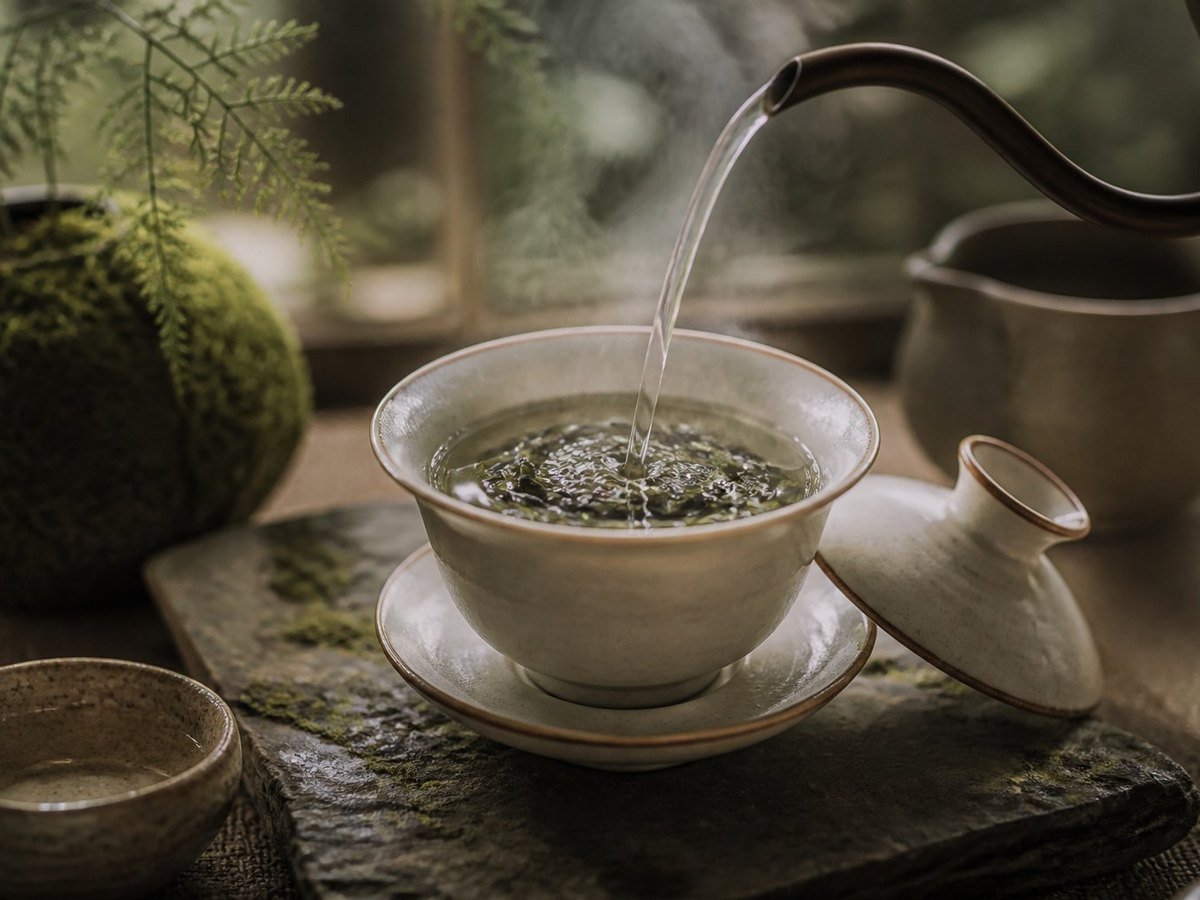
Most people who say they “do not like Huangshan Maofeng” have been brewing it as a tea bag: boiling water, five minutes, a pinch of broken leaf. Maofeng is a downy Anhui green. Heat cooks the chlorophyll the wok was trying to keep.
This is the method we use for Xiangcha Huangshan Maofeng — a gaiwan when you want several short cups, a glass when you want to watch the twist unfurl. How to read the dry leaf is in how to read Huangshan Maofeng.
| Glass | Gaiwan | |
|---|---|---|
| Leaf | 3 g in 200–250 ml | 3 g in 120–150 ml |
| Water | 75–85°C / 167–185°F | 75–85°C / 167–185°F (cooler end) |
| Time | 2–3 minutes, then drink off or lift the leaf | Rinse 3 s, then 15–20 s, +5 s each round |
| Infusions | 1 glass, optional 2nd at 3 minutes | 4–6 cups from the same leaf |
If you only remember one rule: do not pour boiling water on Huangshan Maofeng. That is the whole of our green tea brewing guide, applied to a bud tea that scorches faster than Keemun.
Maofeng is picked as a plump bud with one or two young leaves, then dried as a small twist — not the long flat sword of Taiping Houkui. The down on the bud is the “mao.” It is still a green tea: heated to stop oxidation, then dried. Boiling water extracts the same harsh notes as over-steeping. Cooler water keeps the cup floral and sweet instead of grassy-bitter.
A teaspoon lies. Downy buds look like more leaf than they weigh. Use a $10 jewelry scale once. The sweet spot is 3 grams.
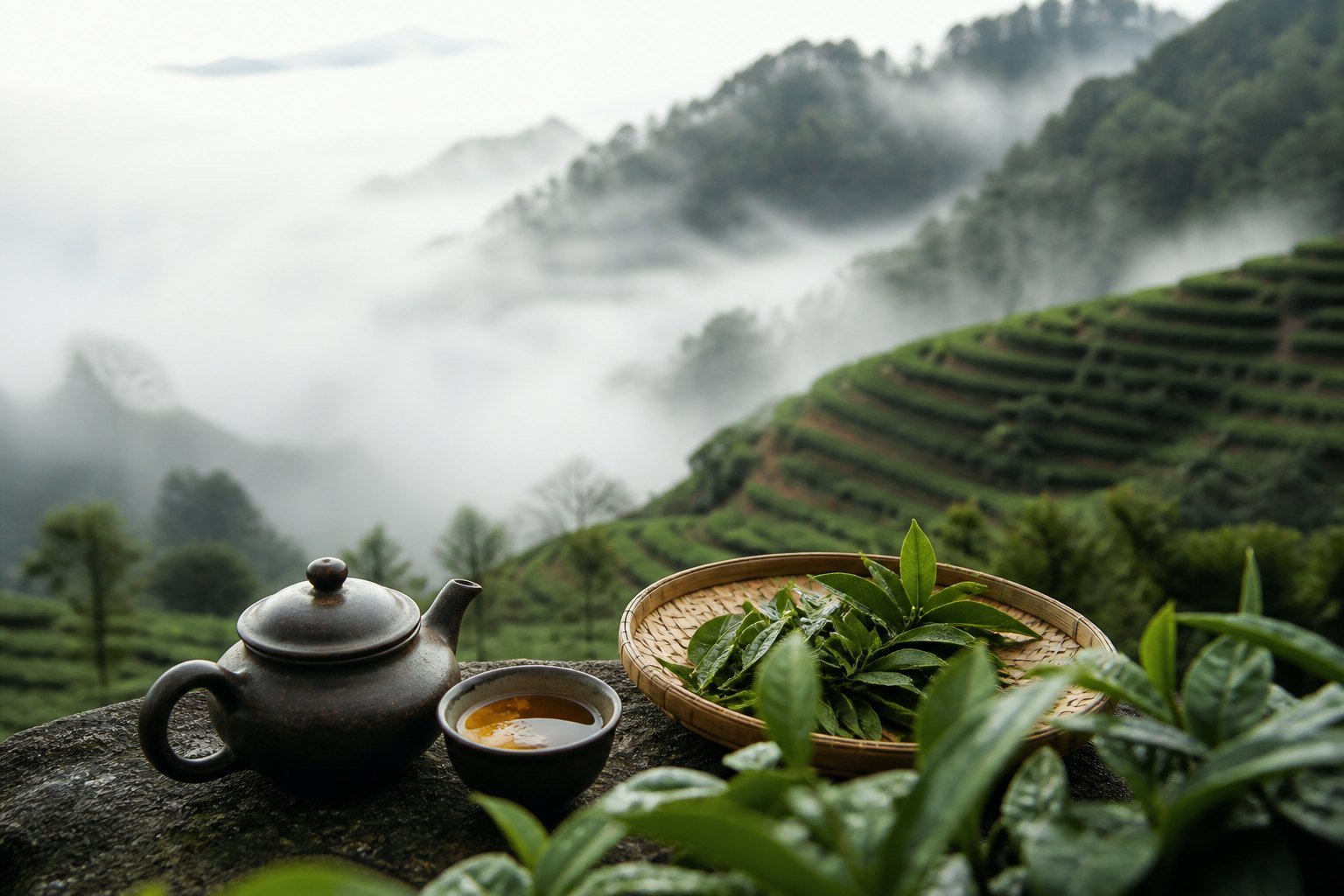
Huangshan Maofeng is a tea of the Huangshan range in Anhui — cloud and mist over the bushes, not a greenhouse tray. Same mountains as Chaoqing and Houkui, a different leaf. Chaoqing is the wok-fired daily cup. Houkui wants space to stand in a tall glass (how to brew Taiping Houkui). Maofeng is the classic floral, chestnut green. If you want powder instead of leaf, that comparison is Maofeng vs matcha.
A gaiwan is a bowl with a lid, not a costume. If you do not own one, a small pot works the same way. The longer Gongfu setup — tray, fairness pitcher, several cups — is in Gongfu tea ceremony for beginners.
Use a clear glass or mug, 200–250 ml. 3 g, 75–85°C, two to three minutes, then drink off or lift the leaf. You should still see whole twists, a yellow-green liquor, not stew. A second glass from the same leaf is optional; do not leave the leaf sitting while you answer email.
Target in the cup: clear, pale, floral steam, a short sweet finish as it cools. Opaque yellow-green means the water boiled or the clock ran. Bitterness here is the kettle, not the garden.
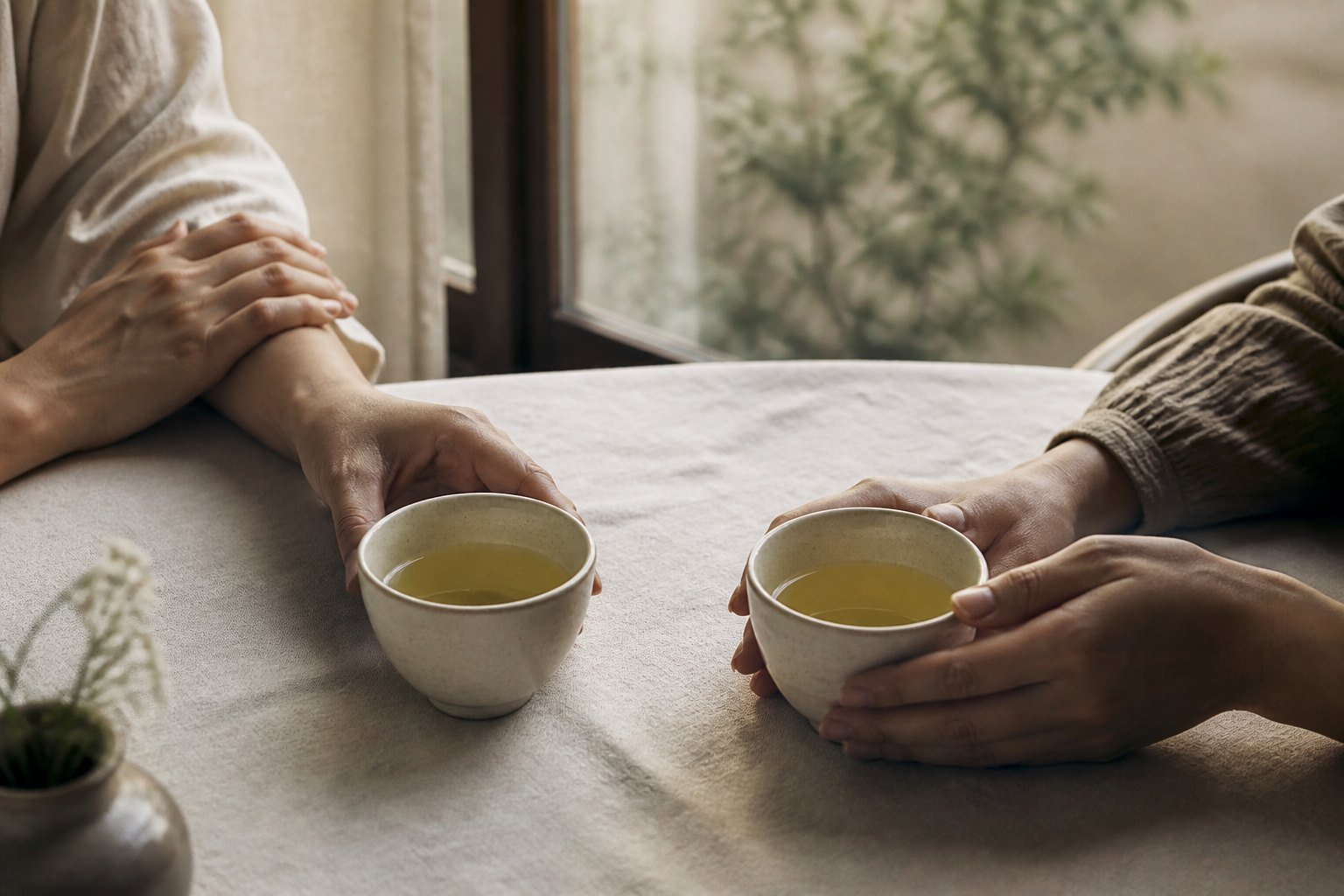
If you are brewing for two, decant the gaiwan into cups at the same time. The first splash is lighter than the last; mixing them is the whole point. The liquor should stay pale yellow-green in a small cup — the same color as a well-brewed glass, just smaller.
Same leaf as the gaiwan in the photo.
Packed in Anhui. The size to try first is the 30 g pouch; tracking is emailed when it ships. Shop Huangshan Maofeng.
75–85°C (167–185°F). Use the cooler end in a gaiwan, the warmer end in a larger glass. Never a rolling boil.
Yes. 3 g, 200–250 ml, two to three minutes, then take the leaf out. A gaiwan is better if you want several cups from the same 3 g.
A similar temperature band, a different shape. Houkui is a long flat blade that wants a tall glass so it can stand. Maofeng is a twist; a gaiwan or an ordinary glass is enough. Do not crush it to make it behave like a bag.
It is a green tea: less of a jolt than a mug of Keemun, more than most herbal tisanes. A glass is a moderate hit. It is not coffee.
Deepen your tea ritual with authentic terroirs, brewing insights, and artisanal teaware.
Comparing Anhui’s two crowning green teas in aroma, mouthfeel, and cultivar.
Read Guide →Distinguishing authentic Shi Da Cha whole leaves from machine-pressed counterfeits.
Read Guide →Learn why gentle 80°C brewing unlocks sweet L-theanine while taming tannins.
Read Guide →Handcrafted Auspicious Embossed Kungfu Set