
SHOPPING BAG0 ITEMS
Your Tea Basket is Empty
Hand-harvested spring mist greens, rare Keemun blacks, and Song Ru Kiln wares await.
Explore Curated Teas →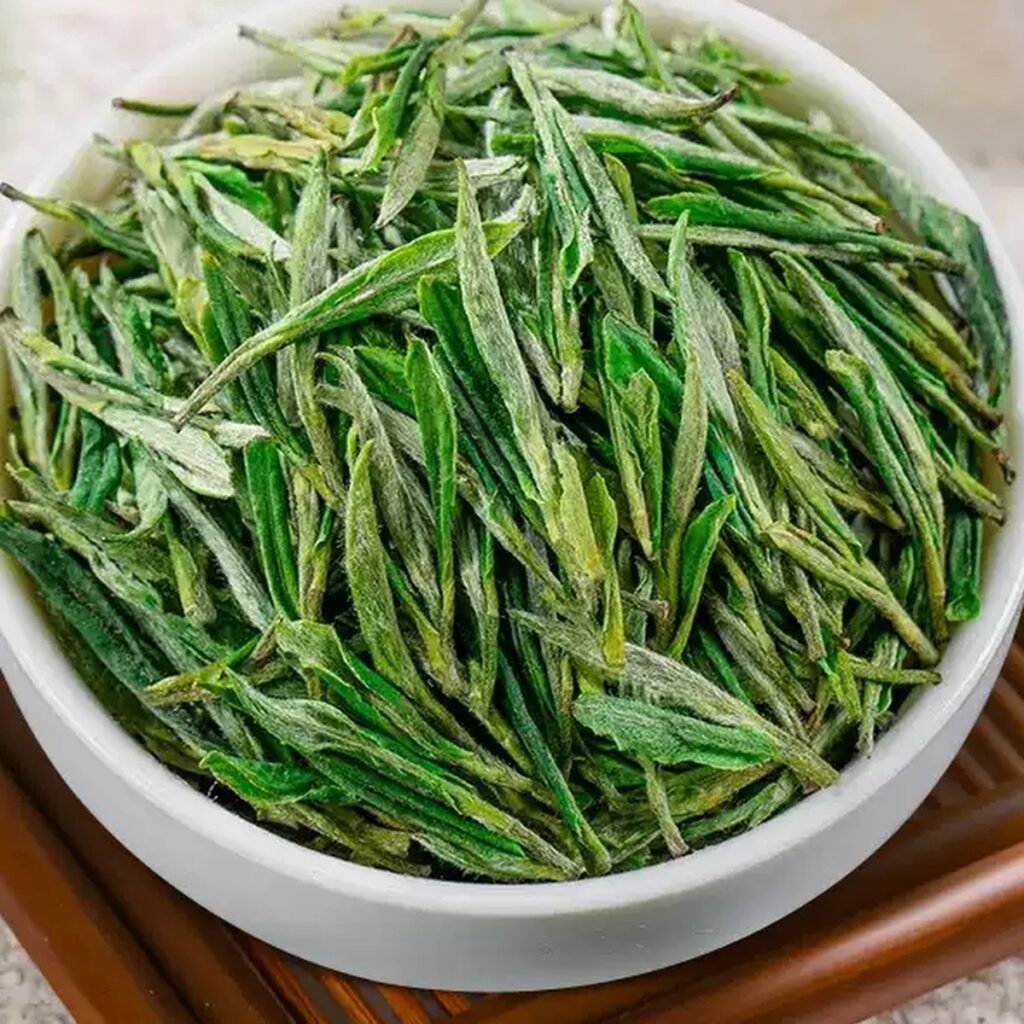
Three photos of the same tea: the shoot on the bush, the downy twist in a bowl, the unfurled leaves in a pale glass. That is how you actually inspect Huangshan Maofeng. The slogans belong in the tasting notes, not stamped on the picture.
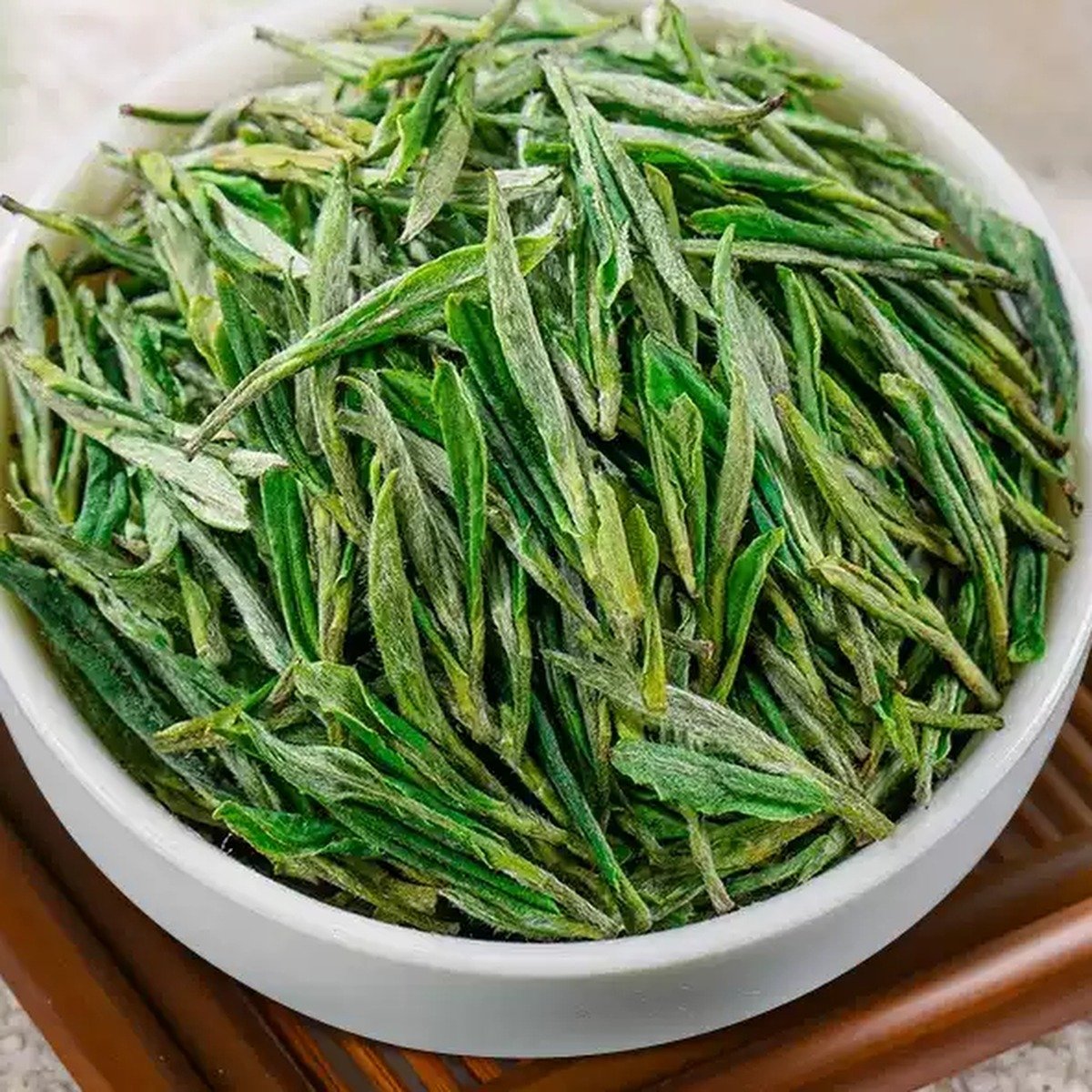
Catalog photos of Huangshan Maofeng are often covered in Chinese copy. Plump buds. Bright yellow-green liquor. Sweet aftertaste. Those lines can be true — they are also easy to paste on a stock shot. We took the stamps off these pictures so you can look at the tea.
This is the same spring lot we pack in Anhui as Xiangcha Huangshan Maofeng. It is a twisted, downy green from the Huangshan range — not the long flat sword of Taiping Houkui, and not a grassy bag. This page is the inspection: garden, dry leaf, glass.
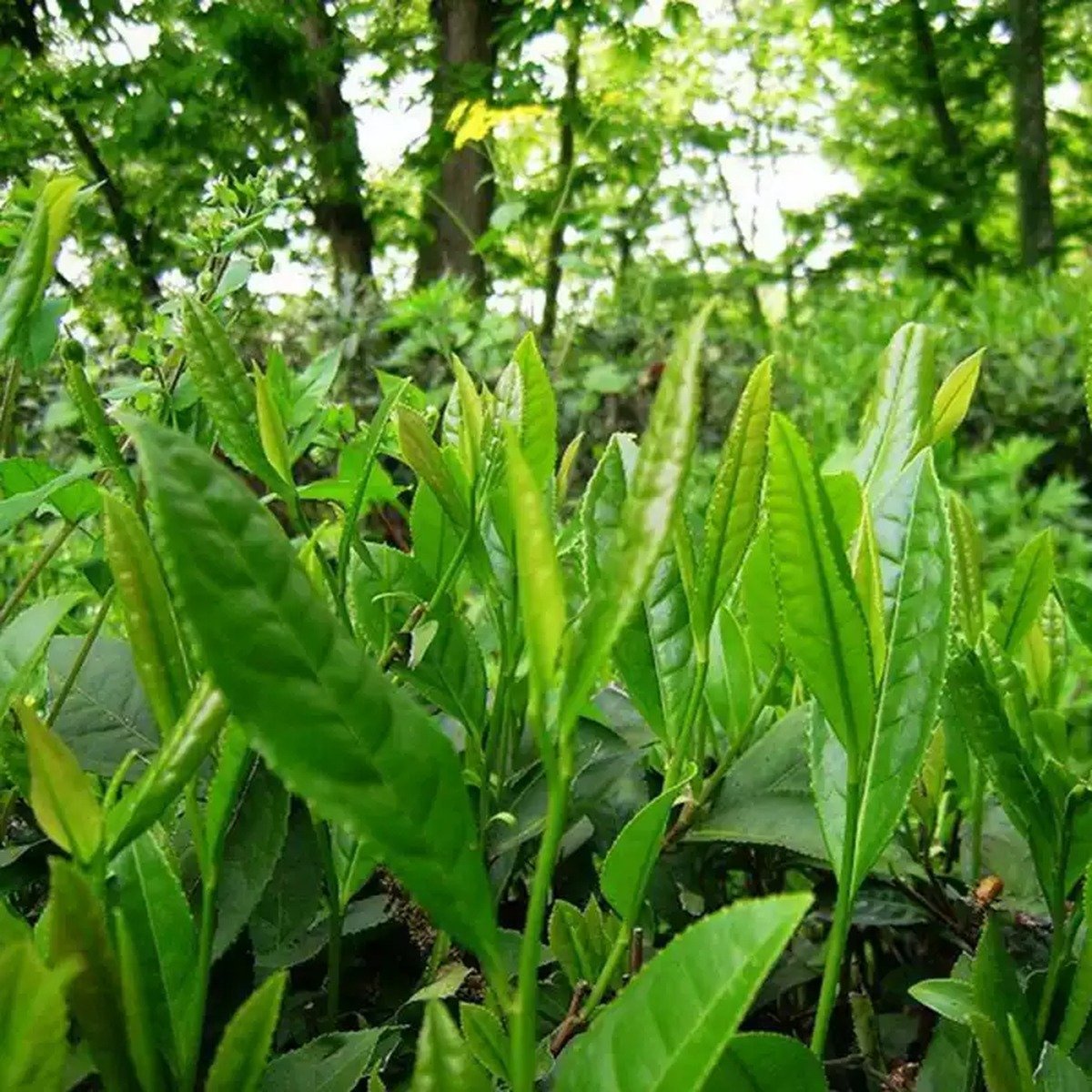
Maofeng is a bud tea. The useful pick is a plump bud with one or two young leaves — “hairy peak” is the down on that bud, not a mountain mascot. In the garden you already see the serrated edge, a bright new green, and shoots that will dry into a small twist rather than a pressed blade.
The setting is a tea garden under trees, not a greenhouse tray. Same mountains as Chaoqing and Houkui, a different leaf. Chaoqing is the wok-fired daily cup. Houkui is the long flat one. Maofeng is the classic Huangshan green people mean when they ask for a floral, chestnut cup.
Chinese listings call this step “appreciating the dry tea.” Skip the poetry and hold a pinch:
The bowl above is that check. Uniform, downy, green. If you cannot pick out whole twists, do not expect a sweet glass later.
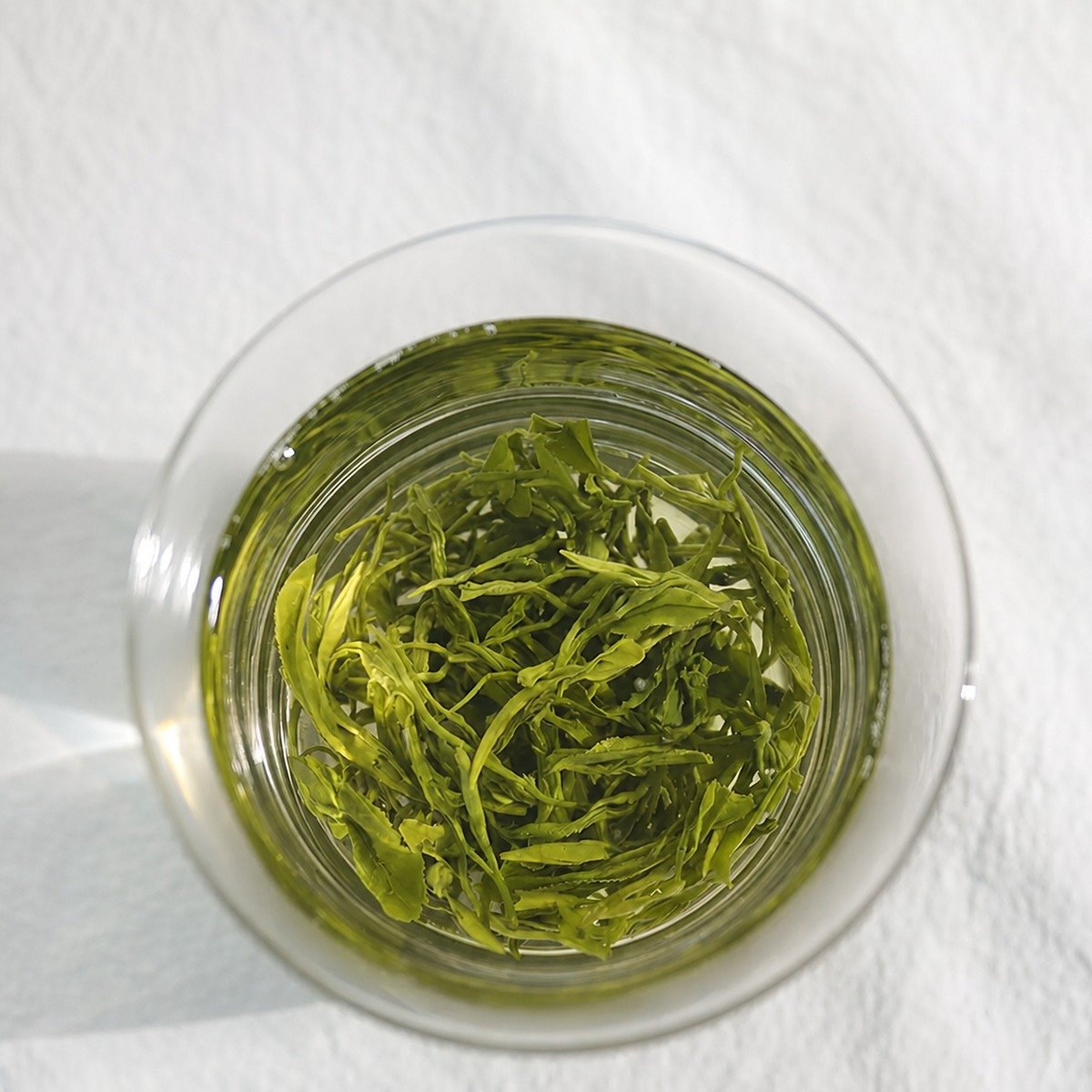
A glass is not a ceremony. It is a window. After two or three minutes you should still be able to read the leaf:
Use about 3 g in 200–250 ml, 75–85°C, then take the leaf out at two to three minutes. The same cooler-water rule as our other greens: how not to make green tea bitter. A gaiwan works if you want several short cups; do not treat this leaf like a breakfast bag.
All of these can live on a Huangshan shelf. They are not substitutes:
If a listing shows a mountain medal and a cartoon and no dry leaf, you are buying the slogan. Store what you buy like any Anhui green: airtight and opaque; sealed, it keeps about 6–10 months, but once opened, finish it within 4–6 weeks — how to store loose leaf tea.
Same leaf as the bowl and the glass.
Packed in Anhui. The size to try first is the 30 g pouch; tracking is emailed when it ships. Shop Huangshan Maofeng.
So you can see the leaf. The claims — plump buds, bright liquor, sweet finish — are in the article, where you can check them against a real cup.
Hairy peak: the down on a young Huangshan bud. It is a green tea, heated to stop oxidation, then dried as a twist. It is not a white tea and it is not Houkui.
Weigh once. Three grams in 200–250 ml is the starting point. A teaspoon of Maofeng lies — downy buds are lighter than they look.
Boiling water, or leaving the leaf in the glass. Cooler than a kettle-roll, two to three minutes, then drink off or lift the leaf. Full notes: stop bitter tea.
Deepen your tea ritual with authentic terroirs, brewing insights, and artisanal teaware.
Comparing Anhui’s two crowning green teas in aroma, mouthfeel, and cultivar.
Read Guide →Distinguishing authentic Shi Da Cha whole leaves from machine-pressed counterfeits.
Read Guide →Learn why gentle 80°C brewing unlocks sweet L-theanine while taming tannins.
Read Guide →Handcrafted Auspicious Embossed Kungfu Set