
SHOPPING BAG0 ITEMS
Your Tea Basket is Empty
Hand-harvested spring mist greens, rare Keemun blacks, and Song Ru Kiln wares await.
Explore Curated Teas →
In the eighth-century Tang Dynasty, the sage Lu Yu penned in The Classic of Tea that “Water is the mother of tea.” Twelve centuries later, modern analytical chemistry confirms what ancient masters knew through palate alone: a cup of tea is 99.5% water, and the dissolved mineral ions in your kettle dictate whether single-origin spring leaves blossom into sweet orchid nectar or collapse into a chalky, astringent liquor.
In This Masterclass:
When you purchase rare, high-mountain teas such as Huangshan Maofeng or Taiping Houkui, you are investing in delicate organic chemistry: aromatic monoterpenols, soothing L-theanine amino acids, and bright catechins synthesized on misty granite mountain slopes. Yet if you pour standard municipal tap water over these leaves, you immediately neutralize their finest qualities.
Tap water in most cities carries high concentrations of chlorine, calcium carbonate, and heavy minerals. When boiling water strikes the tea leaf, these hard minerals bind prematurely to tea polyphenols, creating an insoluble microscopic film (the dreaded “tea scum” visible on the surface) and stripping the tea of its vibrant floral aroma and clean, lingering sweetness (Hui Gan).
Total Dissolved Solids (TDS), measured in parts per million (PPM), calculates the total concentration of dissolved mobile charged ions in water. For specialty Chinese loose leaf tea, the TDS spectrum can make or break your brew:
Not all dissolved minerals are created equal. The trio that governs tea flavor consists of Magnesium (Mg²⁺), Calcium (Ca²⁺), and Bicarbonate (HCO₃⁻):
Magnesium (The Flavor Catalyst): Magnesium ions possess high charge density and bond avidly to delicate oxygen-based aromatic volatiles. Higher magnesium enhances the floral top notes and natural umami of spring green teas.
Calcium (The Body Builder): Calcium softens sharp acidity and creates a smooth, round body. In moderate doses, it accentuates the malt and honey depth of Keemun black tea.
Bicarbonates (The Acid Buffer): Bicarbonates act as a pH buffer. If too high (above 50 ppm), they neutralize the lively natural fruit acidity of tea leaves, leaving the liquor dull, brownish, and lifeless.
| Water Source | Typical TDS | Flavor Impact on Green Tea | Verdict for Gongfu Tea |
|---|---|---|---|
| Unfiltered City Tap | 180 – 350+ ppm | Chlorine taint, bitter, muddy colour | Avoid Completely |
| Standard Pitcher Filter (Brita) | 120 – 220 ppm | Removes chlorine, but leaves water too hard | Acceptable for daily mugs |
| Natural Soft Spring (e.g. Volvic, Icelandic) | 45 – 85 ppm | Silky, sparkling clarity, exquisite floral lift | Gold Standard |
| Remineralized RO Water | 40 – 60 ppm | Precise aroma release, repeatable tasting results | Sommelier Choice |
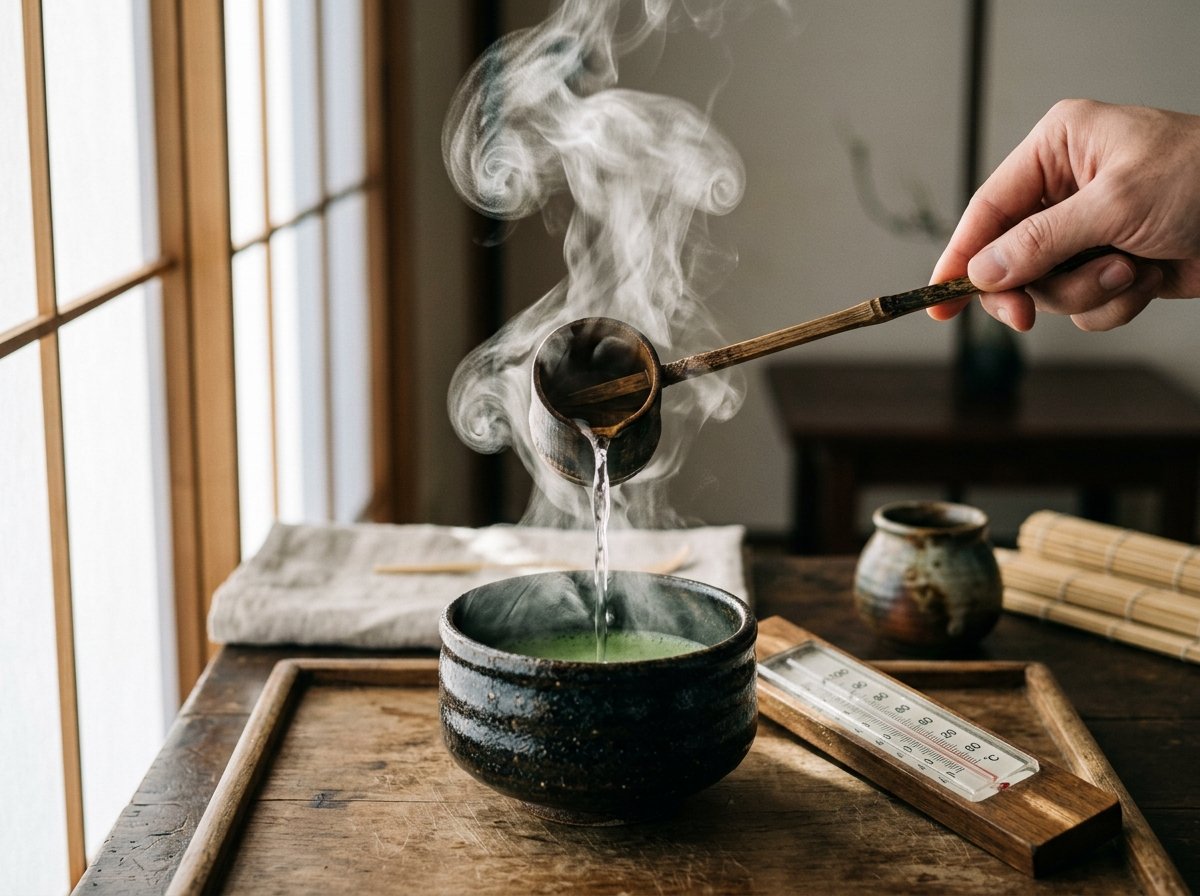
Even with pristine 50 ppm spring water, improper brewing temperature can cause thermal shock. The golden rule: tender, young early-spring buds require gentle warmth, while mature, rolled, or oxidized leaves demand high thermal kinetic energy.
If you don’t have access to natural soft spring water, you can craft world-class Chinese tea water in your kitchen using pure distilled water and food-grade mineral salts (Epsom salts and baking soda):
Standard: Specialty Chinese Gongfu Tea
No. Prolonged boiling actually increases mineral concentration because pure water evaporates while heavy calcium and magnesium ions remain behind, making the water harder. It also depletes dissolved oxygen, making the water taste flat and lifeless.
With zero dissolved minerals to buffer extraction, distilled water acts as an overly aggressive solvent. It extracts organic acids and bitter tannins faster than sweet theanine amino acids, leading to an unbalanced, thin, and aggressively tart brew.
Brands like Volvic (approx. 130 ppm), Icelandic Glacial (approx. 62 ppm), or Mountain Valley Spring (diluted 50/50 with distilled water) offer exceptional mineral profiles. Avoid Evian or San Pellegrino, as their high calcium content (300+ ppm) will immediately ruin delicate green teas.
Yes. Borosilicate glass and glazed ceramic kettles are 100% neutral and preserve water composition. Cast iron tetsubin kettles release trace ferrous iron (Fe²⁺) which enriches Keemun black teas, but can darken delicate green teas.
Lu Yu classified boiling water into three stages: “Shrimp Eyes” (tiny bubbles, ~75°C), “Crab Eyes” (medium bubbling along the rim, ~85°C), and “Surging Billows” (rolling boil, 100°C). For Huangshan Maofeng, “Crab Eyes” is the ideal temperature benchmark.
When paired with soft, mineral-balanced water, our hand-picked Huangshan Maofeng and Keemun teas release their true, unadulterated floral essence.
Deepen your tea ritual with authentic terroirs, brewing insights, and artisanal teaware.
Comparing Anhui’s two crowning green teas in aroma, mouthfeel, and cultivar.
Read Guide →Distinguishing authentic Shi Da Cha whole leaves from machine-pressed counterfeits.
Read Guide →Learn why gentle 80°C brewing unlocks sweet L-theanine while taming tannins.
Read Guide →Handcrafted Auspicious Embossed Kungfu Set