
SHOPPING BAG0 ITEMS
Your Tea Basket is Empty
Hand-harvested spring mist greens, rare Keemun blacks, and Song Ru Kiln wares await.
Explore Curated Teas →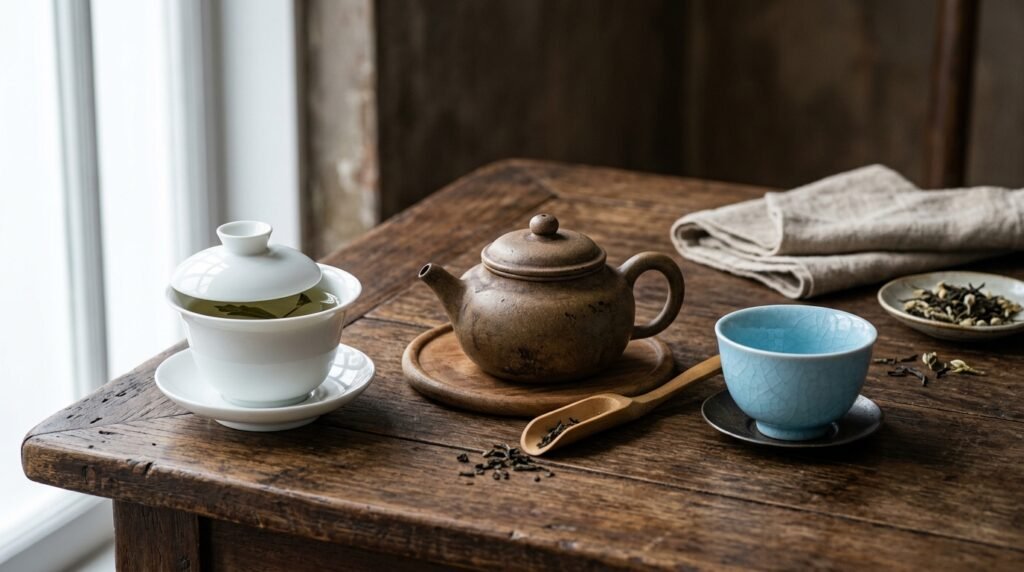
Brew the exact same harvest of high-mountain tea in three different vessels—a white porcelain gaiwan, an unglazed Yixing zisha teapot, and a thick Song Dynasty Ru Kiln celadon cup—and your palate will perceive three completely different beverages. Teaware is not merely a passive container; it is an active thermodynamic filter that shapes aroma volatility, tannin perception, and body weight.
In This Masterclass:
Every ceramic tea vessel interacts with liquid through two primary physical mechanisms: thermal conductivity and surface porosity.
When hot water enters a vessel, thermal energy is conducted into the vessel walls. Thin, vitrified materials lose heat quickly through radiation, protecting delicate spring buds from stewing. Dense, porous clays absorb heat slowly and retain it stubbornly, maintaining the sustained high kinetic energy required to crack open the heavy essential oils in aged teas.
Simultaneously, surface microstructure determines how tea polyphenols interact with the vessel wall. Vitrified glass and porcelain glazes present a frictionless, molecularly sealed barrier that reflects aroma upward into your nose. Unglazed porous clays act as microscopic labyrinths, absorbing bitter astringent tannins while rounding out the texture.
Consisting of three components—the saucer (earth), bowl (humanity), and lid (heaven)—the classical three-piece gaiwan (三才碗) is the universal tool of professional tea sommeliers and buyers across China.
Handcrafted from unique mineral-rich silt clay mined in Yixing, Jiangsu province (Zisha, 紫砂), these unglazed teapots are famous for their dual-porosity structure:
Yixing clay contains both open and closed micro-pores. The open pores allow the teapot to “breathe” without leaking water, while the closed pores trap heat with exceptional efficiency.
The “One Pot, One Tea” Rule: Over years of continuous brewing, the microscopic cavities in the clay absorb essential tea oils, creating an internal patina. If seasoned with Keemun black tea, the pot will begin releasing subtle malt and honey sweetness even when filled with pure hot water. However, unglazed clay should never be used for fresh green tea, as its intense heat retention will cook and yellow the tender green leaves.
First created during the Northern Song Dynasty for the royal court of Emperor Huizong, Ru Kiln (汝窑) porcelain bridges the gap between the neutrality of porcelain and the soulful warmth of clay.
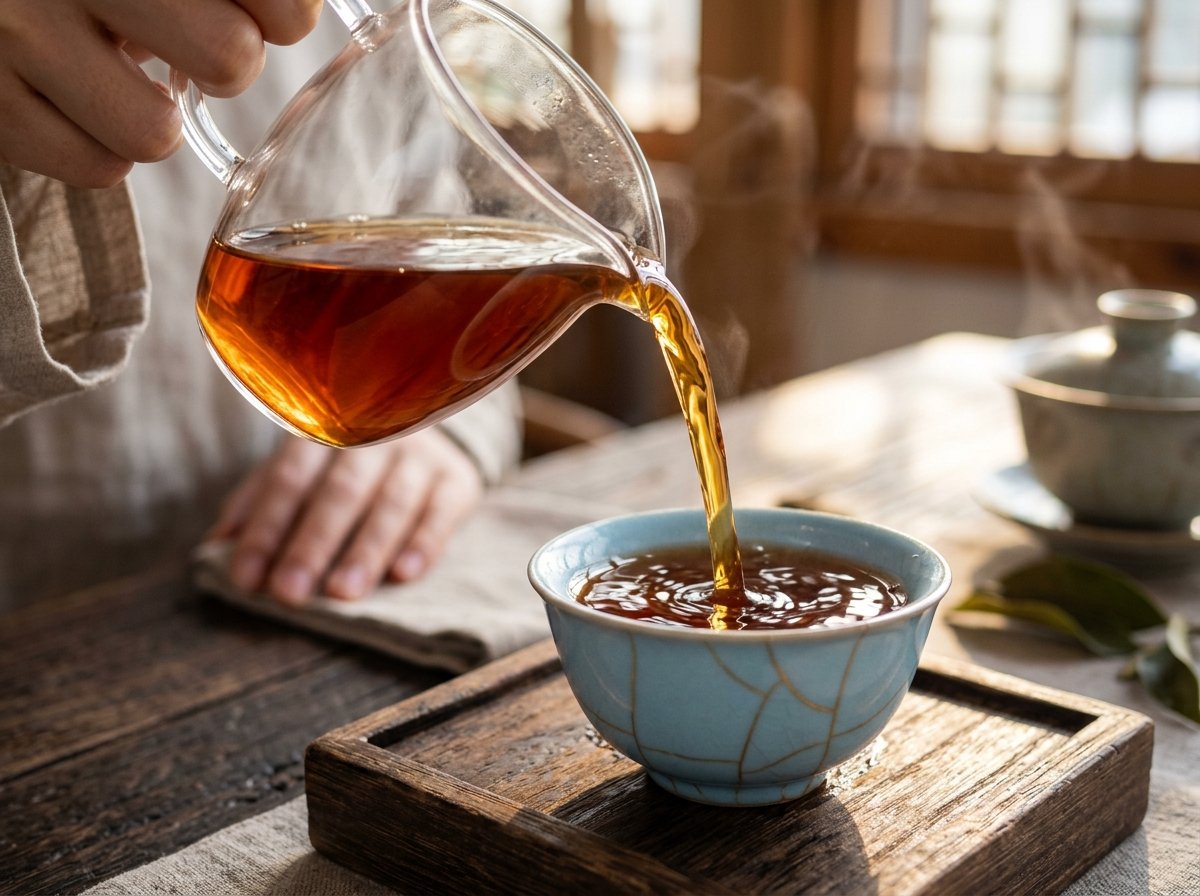
Ru Kiln’s genius lies in its thick, jade-like agate mineral glaze applied over a dense “incense-ash” clay body. Because the glaze contains tiny suspended un-melted quartz and bubbles, it diffuses light with a soft matte luster. When holding hot tea, the thick ceramic walls insulate your fingers while keeping the tea liquor at the optimal sipping temperature (55°C–60°C) for minutes longer than paper-thin porcelain.
| Tea Category | Best Vessel | Why It Works | Vessel to Avoid |
|---|---|---|---|
| Tender Spring Green (Maofeng) | Thin Glazed Gaiwan / Tall Glass | Fast cooling prevents scalding; pristine aroma reflection | Unglazed Yixing (overcooks leaves) |
| Aromatic Black Tea (Keemun) | Ru Kiln Teapot or Zhuni Yixing | Thick walls preserve honey notes; stains glaze into gold veins | Rough unglazed coarse earthenware |
| Heavily Roasted Oolong / Wuyi Rock | Zini Purple Clay Yixing Teapot | Pores buffer heavy charcoal astringency, highlighting floral finish | Paper-thin bone china |
| Aged Pu’er / Dark Tea | High-Fired Yixing Clay Teapot | Maximum thermal retention extracts deep subterranean earthy sweetness | Open wide-mouth bowls |
When sipping from an authentic Ru Kiln cup, you will notice delicate hairline fracture patterns across the surface known as Kaipian (开片) or ice crackle. These fissures occur because the mineral glaze contracts slightly faster than the inner clay body as the kiln cools from 1250°C.
As you enjoy tannin-rich black teas like Keemun over months of daily ritual, the natural tea tannins and theaflavins slowly migrate into these micro-fissures. Gradually, the pale blue celadon develops radiant golden and dark amber ribbons—a living poetic phenomenon the Song scholars named Jin Si Tie Xian (金丝铁线, Golden Threads and Iron Wire). The teaware physically documents your personal journey of tea drinking.
Material Integrity Standard
It is strongly discouraged. Yixing clay holds heat too well and will trap steam, causing delicate spring green leaves to stew and lose their crisp sweetness. High-fired glazed gaiwans or glass pitchers are far superior for green teas.
Not at all. Authentic Ru Kiln porcelain is fired above 1250°C, thoroughly vitrifying the inner clay body into a completely non-porous stoneware matrix. The crazing exists solely within the surface mineral glaze layer and is 100% food-safe.
Small-format brewing (Gongfu Cha) utilizes a high leaf-to-water ratio with quick 5-to-15 second infusions. A 120mL vessel fits comfortably in human hands, allows lightning-fast pours, and reveals the subtle taste evolution across 8 to 12 steepings.
Simply sprinkle a small pinch of baking soda onto a damp cotton towel and wipe gently. The gentle alkaline action lifts polyphenolic stains instantly without scratching the glazed porcelain or leaving synthetic perfumes.
Bone china is lightweight and highly translucent, but its walls are typically too thin to hold warmth during Gongfu infusions. Traditional Jingdezhen hard-paste porcelain or celadon provides better thermal balance for multi-steep Chinese teas.
Hand-trimmed from incense-ash clay and bathed in real agate mineral glaze, our Ru Kiln collection is made to be treasured and nurtured for a lifetime.
Deepen your tea ritual with authentic terroirs, brewing insights, and artisanal teaware.
Comparing Anhui’s two crowning green teas in aroma, mouthfeel, and cultivar.
Read Guide →Distinguishing authentic Shi Da Cha whole leaves from machine-pressed counterfeits.
Read Guide →Learn why gentle 80°C brewing unlocks sweet L-theanine while taming tannins.
Read Guide →Handcrafted Auspicious Embossed Kungfu Set